From the Editors
Jadaliyya Launches DARS Page: Daily Acts of Resistance and Subversion
Tadween Publishing Blog is here! Check it out
Jadaliyya's first book is now available! Click here.
Want to find out about new books? Visit our expanding NEWTON page. Click here.
Interested in writing a Review for Jadaliyya? Visit our Call for Reviews here.
الآن . . . القسم العربي بحلة جديدة
Jadaliyya Launches Photography Page (click here!)
Call for Photos: Become a Contributing Photographer at Jadaliyya
Contesting Narratives, Locating Power (Lund Conference)
Comparative and International Law of the Middle East After the Uprisings: Re-assessing the State of the Arab State
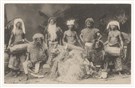
[image from unknown archive]
-
What is your view of the recent protest/revolutionary movements in the region in the past 3 months?
The uprisings in the Arab world in the last three months represent an opportunity for a fundamental paradigm shift in the study of the Middle East in the United States. These events challenge all of the conventional wisdom about the region, notably concerning the durability of authoritarianism, the bankruptcy of pan-Arab solidarity, the centrality of non-Arab players (Israel, Iran, Turkey), the quiescence of Arab civil society and the alleged ascendance of political Islam as the only idiom of opposition. In some instances, the uprisings will usher in moments of change that will require new approaches; elsewhere repression should not be mistaken for “continuity.” There, too, the fundamental equation of state legitimacy will have been called into question and altered in ways that require careful study. Themes that should be the focus of study in the coming period include the importance of social movements, new modes of organizing and the role of counter-revolution and risks of new consolidations of power in the region. -
What are the implications of these movements for the (study of the) region, for your discipline, for your research topic(s)/agenda(s)?
I study the comparative law of the Middle East and the implications are very wide-ranging, from new constitution-writing or reform exercises to calls for accountability for corruption to the employment of legal discourses to structure both forms of political opposition and the responses of defensive regimes. This is also an occasion – once again – to query the role of the American academe in seeking to shape outcomes in the region (particularly as law schools imagine themselves as appropriate sources for constitutional advice, as has been the case with respect to the Egyptian and Bahraini regimes). Finally, as a scholar of international human rights, I also believe a new model of grassroots, transnational human rights solidarity has emerged in the Arab world that should be incorporated into the study of the international human rights movement in law as well as the social sciences. -
What opportunities do you see today in terms of setting a pedagogic agenda that goes beyond old paradigms? Or that goes beyond assessing dominant paradigms? (and is any of this necessary in the first place?)
While it is too soon to definitively identify a new pedagogical agenda, there is no question the dominant paradigms no longer hold. This semester I have drawn on examples from the Arab world for every lecture I have given in my law school course International Human Rights, to illustrate the meaning and application of core international law instruments in a region that had previously been all but excluded from study on the grounds that there was no regional human rights regime. Events in the Arab world have illustrated that the insistence on formal regional human rights institutions to study the efficacy of human rights instruments and discourses is misguided. I have also drawn examples from the Libya intervention in the Laws of War course I teach at the law school throughout the second half of the semester. I believe Libya represents a new model of (s)elective use of force for human-rights-based regime change that is an important and dangerous precedent. The Libyan intervention also represents a transformation of arguments concerning humanitarian intervention. I plan to revise my own teaching of the following three courses based on the events of this spring: International Human Rights, Laws of War and Comparative Law of the Middle East. -
Even if you’re not teaching the Middle East, how did the emergence of these movements influence what you are (or will be) teaching? Could the study of the revolutionary movements in the Middle East constitute a critical contribution to the disciplines in the humanities and the social sciences?
[See my answer to 3] -
Finally, in light of the recent developments, are there new questions, subjects, historic periods, and themes that are important to examine in the study of the region, and might they be replacing other subjects of inquiry?
Some of the new questions (or perhaps old questions that need to be posed anew) that I believe we have to ask in the comparative law of the Middle East include the following: (1) what is the appropriate measure of “change” or “continuity” in the region – how do we distinguish fundamental shifts in underlying distributions of authority from regime survival strategies (i.e., preservation through transformation)? (2) what are the bases for regime “legitimacy” and how might that be defined? (3) what accounts for variation (if any) of opposition methods and outcomes in the context of monarchical versus republican authoritarian institutions? (4) what are the structural forces promoting or inhibiting change? (5) what is the role of legacies of authoritarianism in transitional processes and how might such legacies undercut consolidation? (6) what is the significance of patronage networks in triggering demands for reform and how do anti-corruption priorities shape opposition demands? (7) is constitutional reform central to transition and/or should it be?
“So what are we seeing in Israel? A farce? A brief spasm over bread? Spoiled whingeing over the price of a flat for the children of the generals? An impossible chimera of joint struggle, the faint historical tracings of the Palestine Communist Party evanescently appearing in the Israeli imaginary?"click | email | tweet
Jadalicious / جدلشس
Twitter Updates
Latest Entries
View All Entries »- Maghreb Media Roundup (May 24)
- أوهام ليبرالية
- Tadween Roundup: News and Analysis from the Publishing/Academic World
- Syria Media Roundup (May 23)
- Asfari Institute Inaugural Conference: New Spaces of Civil Society Activism in the Arab World (Beirut, 23-24 May)
- Women's Rights in the Egyptian Constitution: (Neo)Liberalism's Family Values
- مسخ الذاكرة
- New Texts Out Now: Louise Cainkar, Global Arab World Migrations and Diasporas
- Arabian Peninsula Media Roundup (May 21)
- إعادة الحساب الدائمة: إساءة فهم سوريا بعد سنتين
- From al-Araqib to Susiya: Forced Displacement of Palestinians on Both Sides of the Green Line
- إعجام
- كارل ماركس واليسار في لبنان
- Picturing Algeria
- Egypt Media Roundup (May 20)
- Last Week on Jadaliyya (May 13-19)
- Jadaliyya's Occupation, Intervention, and Law Page Resonates
- Al Jazeera Management Orders Joseph Massad Article Pulled in an Act of Pro-Israel Censorship
- سعادت حسن منتو: قصة قصيرة
- Reports Roundup (May 18)