From the Editors
Jadaliyya Launches DARS Page: Daily Acts of Resistance and Subversion
Tadween Publishing Blog is here! Check it out
Jadaliyya's first book is now available! Click here.
Want to find out about new books? Visit our expanding NEWTON page. Click here.
Interested in writing a Review for Jadaliyya? Visit our Call for Reviews here.
الآن . . . القسم العربي بحلة جديدة
Jadaliyya Launches Photography Page (click here!)
Call for Photos: Become a Contributing Photographer at Jadaliyya
Urban Scars, An Unfinished Essay: Jaffa/Tel Aviv
[Image from author's archive]
Urban scars, cutting deep into the flesh of the city. Lines of division that linger through the civic body, long after their political and social meaning was lost. Areas of inexplicable void within a thriving city. Areas that are constantly on the drawing tables of architects and city planners, who seek to redeem the past, to bring closure to whatever conflict there were, to move on, god dammit. The property value is huge. The return on investment promising. So why do they still stand empty and dead, like in Amsterdam’s former Jewish neighbourhood, lifeless even 65 years after the deportation? And why, even when they are filled with parks and monuments and museums – like in Berlin’s former no-man’s land - they still feel empty, artificial, and wrong?
Cities are place of change, and change always means a struggle - violent or subtle - between men and women, rich and poor, black and white, one religious group against the other, indigenous residents and immigrants. The way the city accommodates its different constituencies, the possibilities it opens and closes before them, are never static. And change comes, through negotiation and conflict; bourgeois neighbourhoods turn into slums; seedy streets are gentrified into yuppielands; megalomaniac city planners draw lines of battlefields on city maps, marking boulevards, highways and high-rise buildings. Decay and development are inevitable and often involve pain. But I am talking about something else: about scars, about the visible marks of trauma that cuts deep and refuses to heal. Those strangely-lifeless quarters, moments in space where the rhythm of the urban fabric is broken, the music lost. Most often these scars are the legacy of wars and displacement.
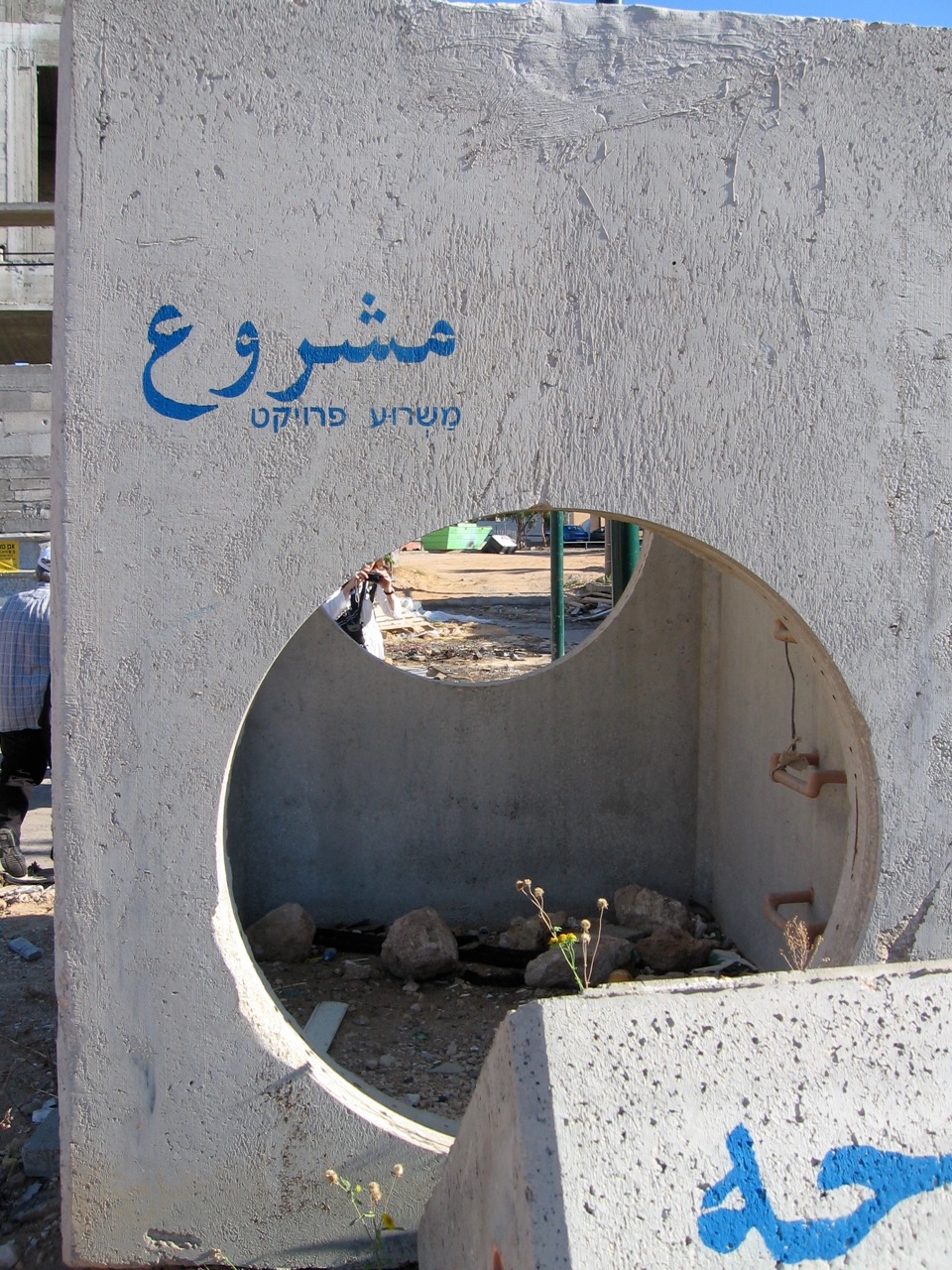
Such is the scar that divides Tel Aviv from Jafa. Sixty-two years after the 1948 war, the no man's land between the two former sisters-rivals remains strangely empty. Where once were borderline neighbourhoods there are now parking grounds, a promenade, half demolished houses, a run-down industrial zone, and plenty of promises for regeneration and a better future. It is a void, like a sudden break in the conversation of the city. It is not a quiet area - busy roads lead traffic from here to there, from there to here, but hardly no-one lives in the middle, hardly no-one stops because there is nowhere to stop, no reason to stop. No, it is not a quiet area, yet still there is strange silence, the absence of those comforting sounds of urban life: loud human voices.
The former border between the two municipalities is still, to a large degree, the border between north and south, rich and poor, strong and weak, ruler and ruled. At the same time, the south is changing - whatever survived of Arab Jaffa and Jaffa's former Jewish neighbourhoods (Florentin, Neveh Shanan, Shapira). Gentrification, dispossession, an influx of migrant workers and refugees, residential developments and planning atrocities: "South Tel Aviv" is hot, as far as property developers are concerned. Yet the scar remains; it is evident in the roundabout ways that one has to follow in order to travel from Tel Aviv to Jaffa.
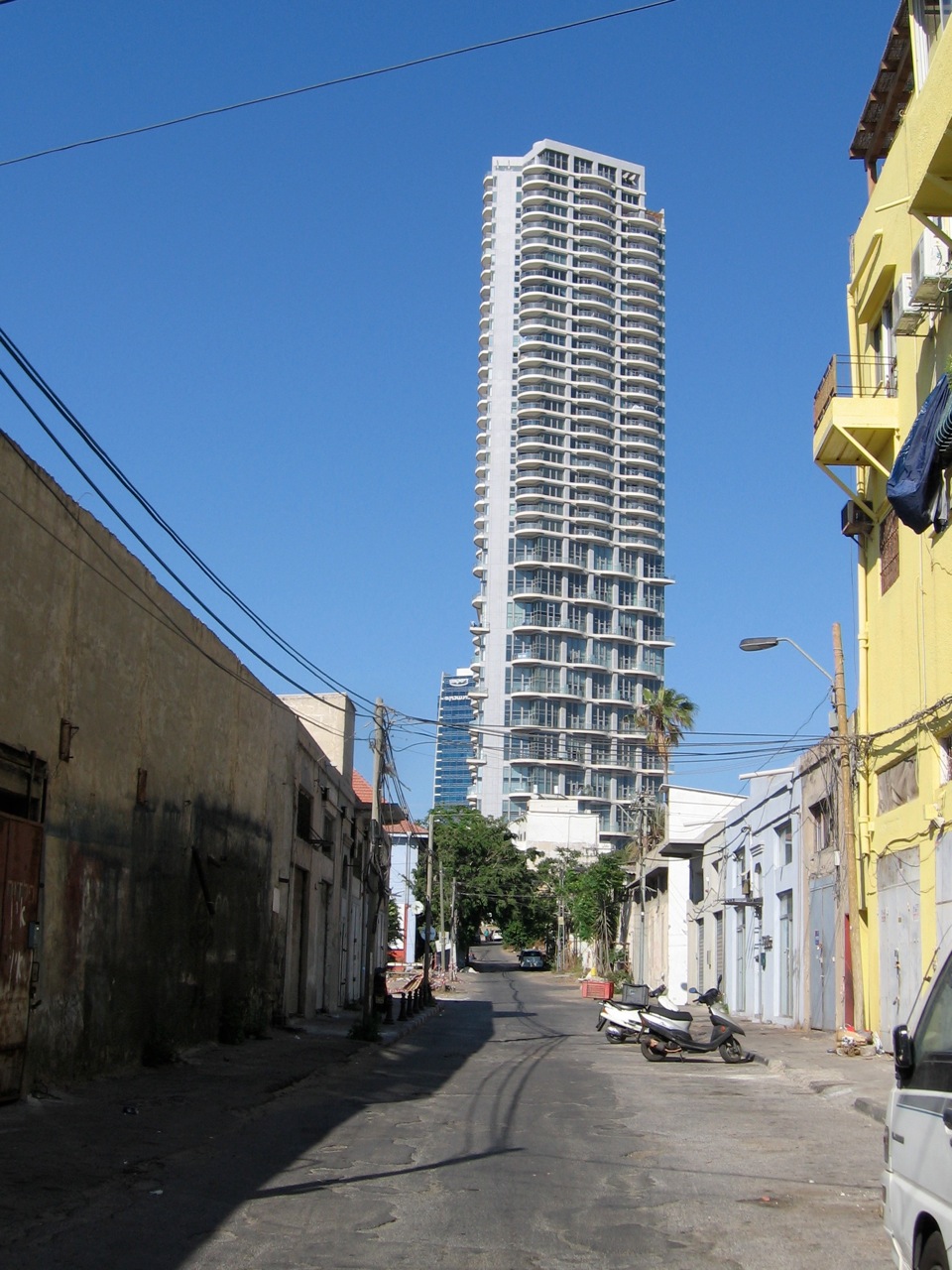
Tel Avivis would not typically think of their city as scarred by the Israeli-Palestinian conflict. If anything, Tel Aviv imagines itself as an anathema to the conflict; a place beyond the cycle of violence and bigotry. A secular metropolis, on the shores of the Mediterranean, looking westwards, to Europe, to New York. Often Tel Avivis are accused of being out of touch from the rest of Israel, far from suicide bombers or rocket attacks, they live in on their island of "normality", between the long beach and cool bars, money and art. And Tel Aviv, which celebrated its 100th birthday in 2009, is "the first Hebrew city", the city which was born from sand, a creation of urban modernity out of nothing. This is of course a myth, as right-wing settlers often like to remind Tel Aviv leftists, Tel Aviv university was built on the ruins of the Palestinian village Shaykh Muwanis, whose population was made to leave in 1948. But Shaykh Muwanis, like other Arab villages in this area (Jamasin and Sumayl) were devoured whole by Tel Aviv; barely any traces can be seen of them today. Their obliteration enabled Tel Avivis to pretend that here there was no dispossession and destruction, only pioneer spirit, hard work and creative construction.
But Jaffa is another story altogether. For Jaffa is still there, however destroyed, however changed. For the Palestinians who live there, and for those who do not but still think of it as their hometown, Jaffa is still an open wound, an open question.
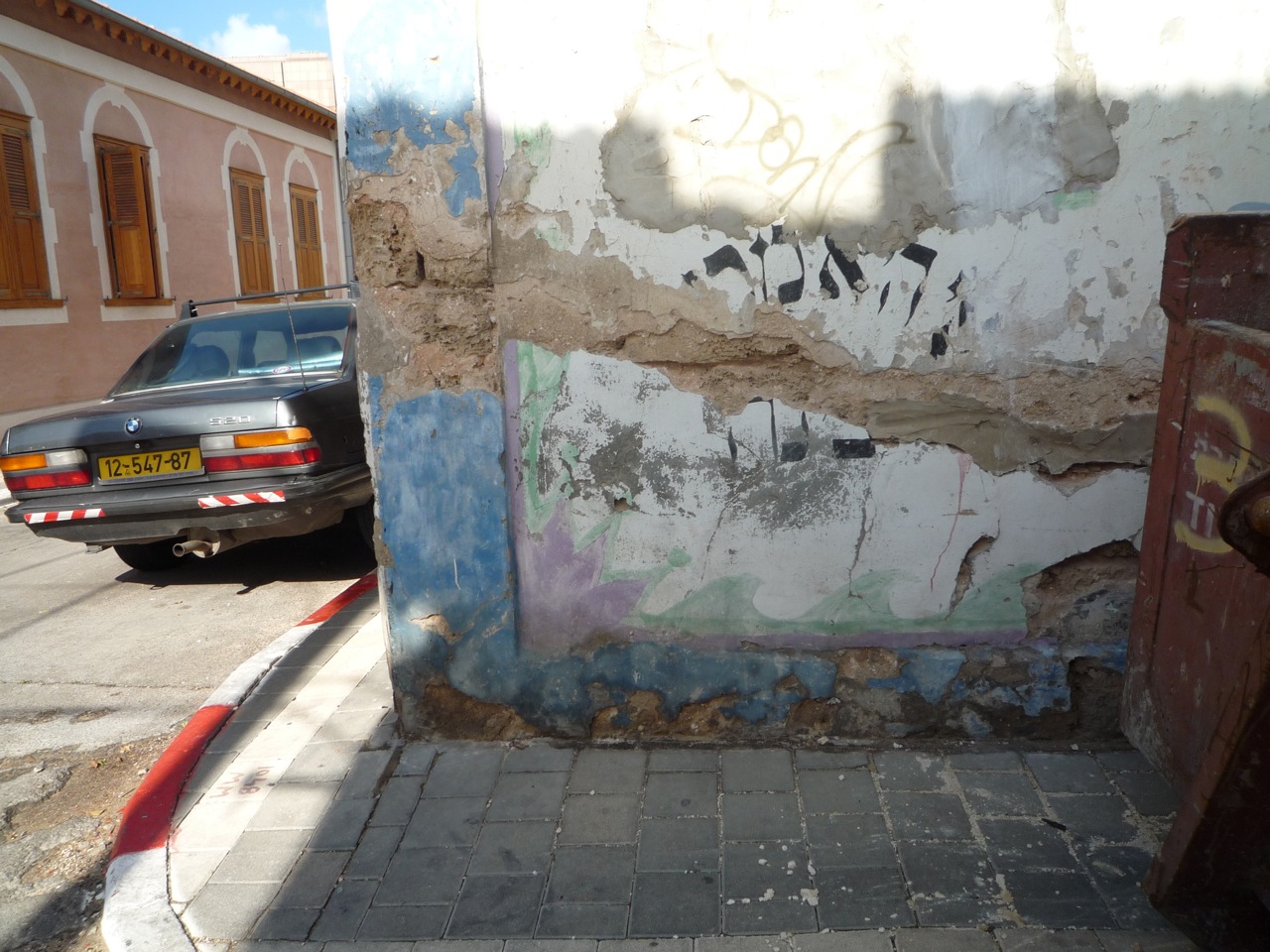
Tel Aviv is Jaffa's daughter, sister, and killer; Tel Aviv was born not, as the Hebrew song has it, "from the foam of waves' and clouds", but as a suburb of the country's biggest port town, Palestine's most cosmopolitan centre, its commercial and cultural capital. Soon the young suburb became a rival town, and then a rival port, until in 1948 the tension was decided through war and violence. And Jaffa lost, and its defeat was of biblical dimensions, as almost its entire population went into exile.
But I don't want to write about Jaffa or of Tel Aviv; I want to write about the dividing area between the two, about the scar that keeps them apart, long after that victory and that defeat. For the past decade I have been researching the history of this land before 1948, and I have been drawn especially to the areas of in-between, the borderline neighbourhoods, the uneasy sharing of urban space, and to the people in-between, those whose identification with one of the sides to the emerging conflict was fraught with difficulty and torment. I spent years looking at maps, reading the newspapers, and taking down notes from a long list of memoirs and diaries. It is no surprise, then, that I can see the destroyed neighbourhoods and houses; I hear the ghosts, I travel with them through streets which are no longer there, I know their stories by heart. And so I see the scar as if it was an open wound. I see the absence, I feel it deeply and most of all in those urban scars.
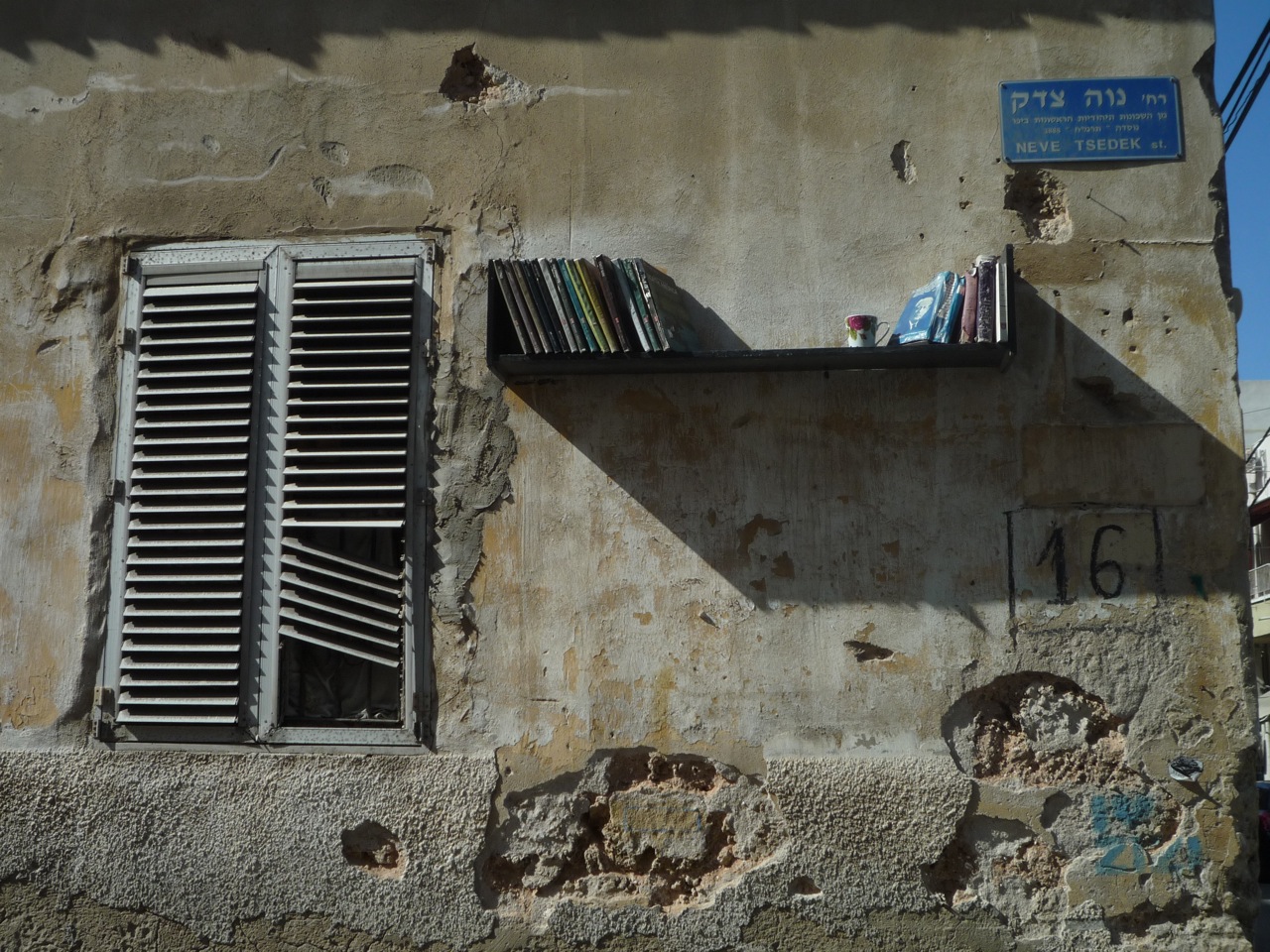
When you know Jaffa's former grandeur, it is impossible to miss the scar; it cries out. The void shouts out; the attempts to fill it seem inadequate and artificial. I show it to fellow Jewish Israelis. Look: the conflict is here, in front of you. Here is the story of dispossession, here is our ongoing trauma. Not only in Gaza, or in Jerusalem, or in the refugee camps, but here, in Tel Aviv's "Banana Beach": sixty years have passed and we have managed to destroy Jaffa's Manshiya neighbourhood, but not to build anything in its stead. Sixty years have passed and still have this strange gap within our city.
But what for me seems evident, is invisible for others. Where I see trauma, others see nothing; just an empty parking lot, just another urban wasteland. “What is there to see exactly? A rundown area? Isn't it the nature of cities? Some areas are good, some are bad, city planning can go wrong, and anyway, just wait a couple of more years, you'll see this area completely changed. You know, south Tel Aviv is becoming very fashionable these days.”
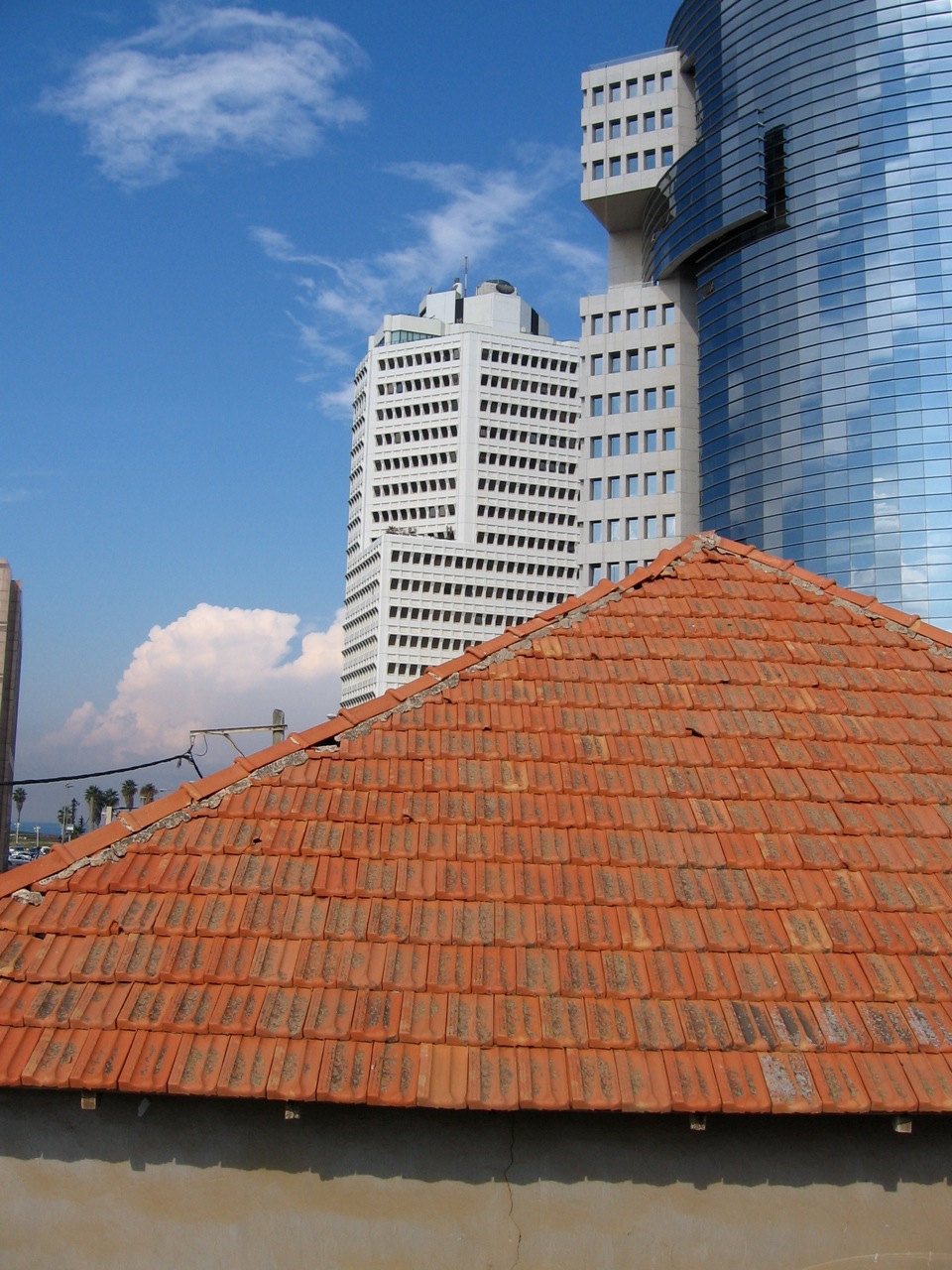
One of the problems in this conflict - perhaps also in others - is that people feel that the truth about it is evident. You just have to open your eyes. Just look and you will see for yourself. And so the partisans repeat what for them is obvious, and for others are clear inventions. The debate never gets anywhere. What is lost on the participants is their own point of view, the place they stand and from which they see. Others do not stand there; they have not heard the stories, read the histories. Therefore they can’t see. Nothing is ever evident: seeing is always mediated.
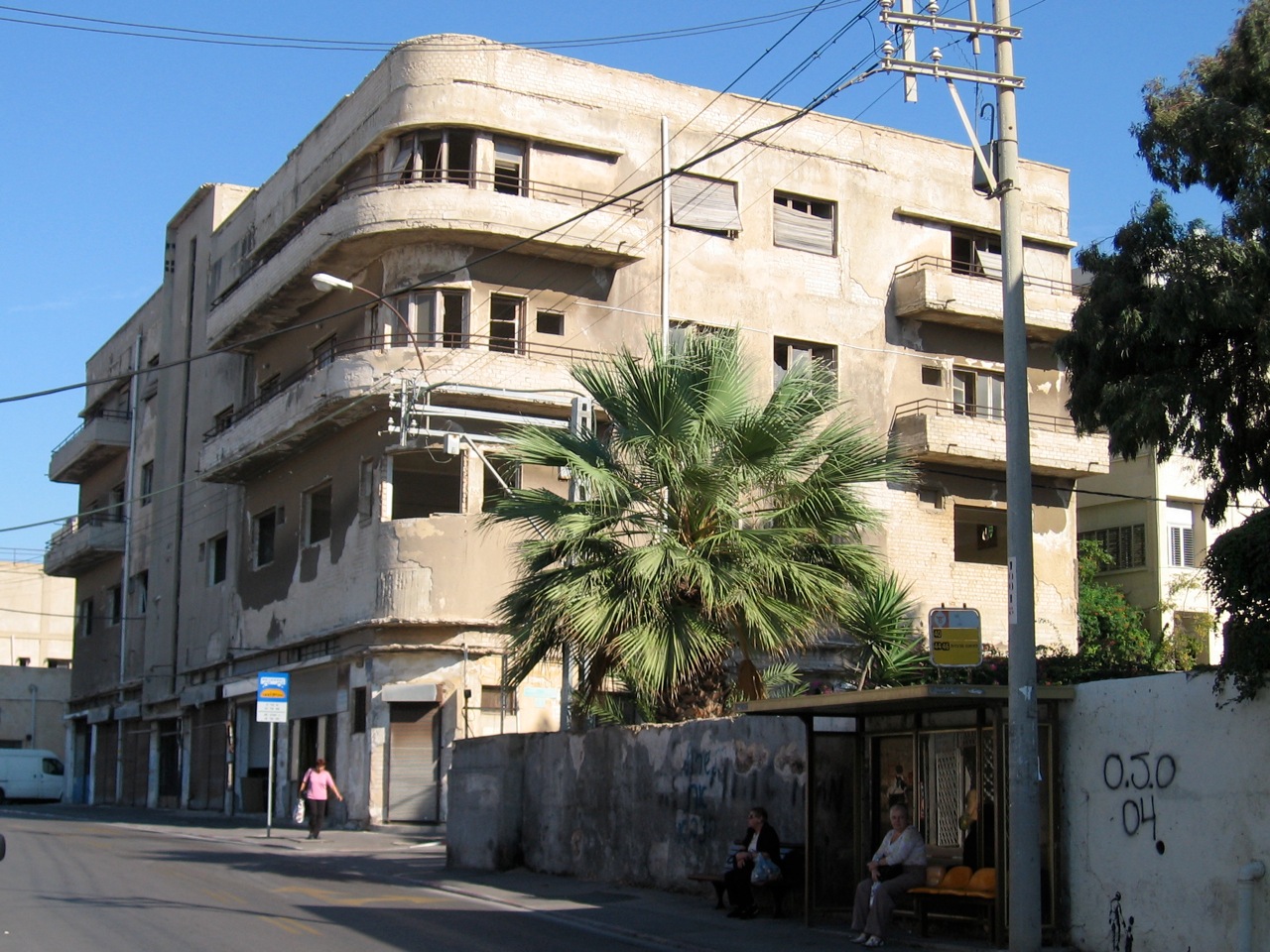
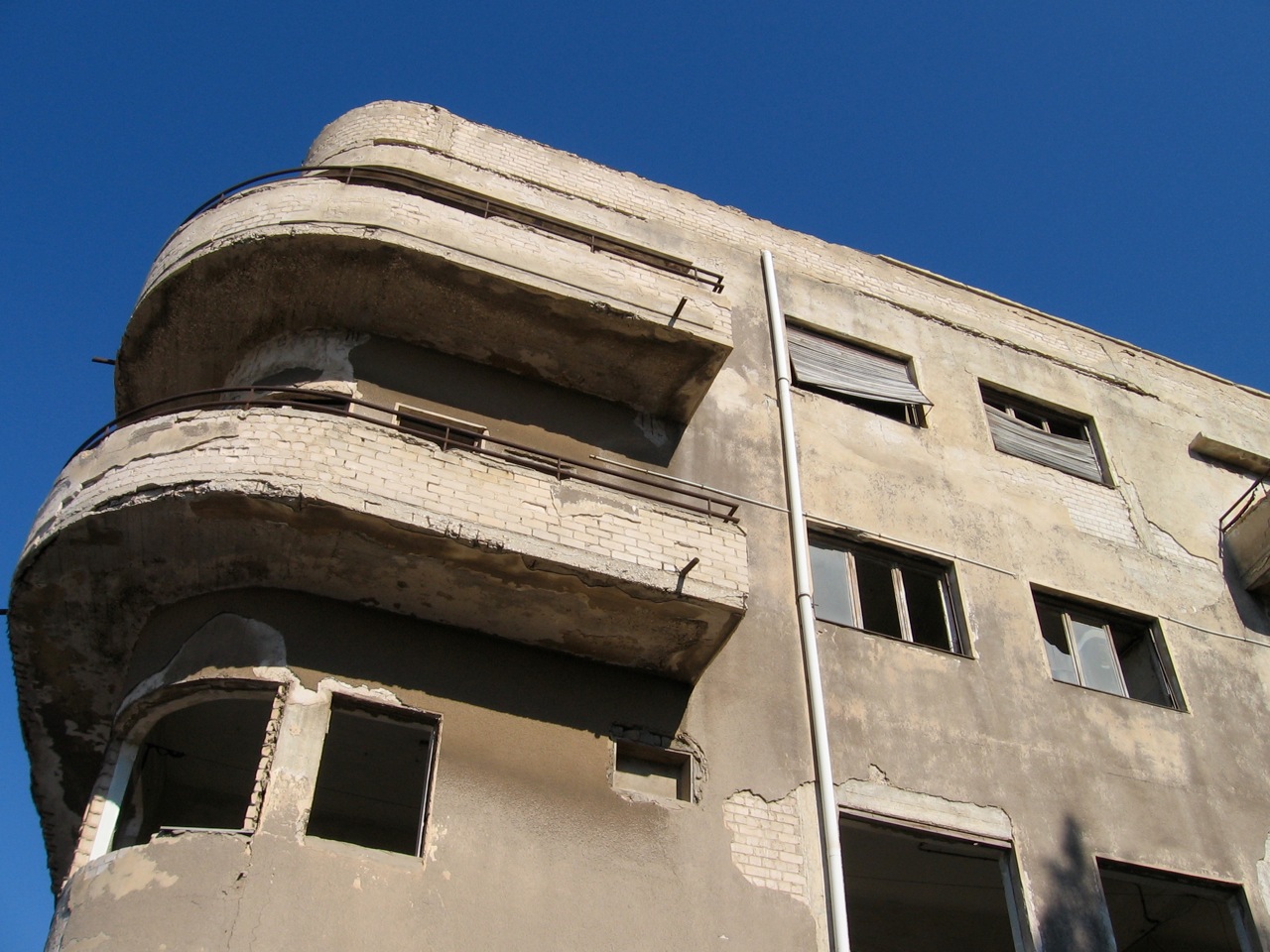
Trauma exists in the urban landscape only in the eyes of those who see it. And many do not see it; probably they do not wish to see it. The problem for Jewish Israelis is that once you start seeing the scars, you’ll see them everywhere. It becomes a real obsession. Every forest is hiding a destroyed village, every history book an exercise in denial. So naturally most Israelis prefer not to see.
To be sure, the scar along the seam line between Jaffa and Tel Aviv cannot be fixed simply through building projects and real-estate speculation. The process of healing would require from Israelis considerable political will and soul searching - something which they are not prepared for at the moment, although I believe the moment of reckoning may be closer than most people imagine.
6 comments for "Urban Scars, An Unfinished Essay: Jaffa/Tel Aviv "
I'm wondering why you illustrate your essay with photos of Neve Zedek, which I would hardly describe as a "border" neighborhood - only the wealthy can live there (and the bits of remaining grunge are left as a pretty backdrop to make tourists and hobby photographers happy).
You also have pictures in Florentin (of the Neve Zedek tower), which is not Jaffa... It's on the "border" with Jaffa I suppose.
Also, Neve Zedek wasn't built on a former Arab village and neither was Florentin. The closest I could get to your assertion is to say that Florentin was built on orange groves purchased from Arabs. But that's it.
Thank you for these two comments. Very interesting to read as you are coming from quite different perspectives, but both of you seem to demand a clearer line of division between the two sides. The spatial-moral typologies that you suggest seek to incriminate or exonerate, but in either case leave no room for ambiguity. And my own interest in the no-man's land is exactly because of its potential for ambiguity. Let me be clear: it is not a neutral zone, no "middle ground", no symmetry to be sure, and not a comfortable position between the two sides, but rather a site of conflict and its aftermath, where things were at least at some point not completely clear for everybody: a useful place to disrupt the linearity of history, at least this is how I see it.
Peter - while the colonial model certainly applies to Jaffa-Tel Aviv relations, one has to distinguish between different stages. Dynamics between Tel Aviv and Jaffa vary considerably between late Ottoman / British Mandate / post-1948 periods, and while the latter stage can be compared to current settlement policies in Jerusalem, the earlier deserve a separate discussion. The land code is indeed crucial. Notwithstanding Mark Levine's examples of the incorporation of some Sumayil land into Tel Aviv, land policy under the British was geared towards the facilitation of land sale to Zionists, and expropriation or diversion of public land was rare to the best of my knowledge; the British were reluctant to use such means. This is why in 1947 Jews only owned only 7% of land in Palestine, after 60 years of Zionist land purchases and 30 years of the mandate. Har Homa, on the other hand, was an direct expropriation of private land (not "unused land"), and in most settlements land was grabbed as "state land" and then reallocated. Both practices were employed on a massive scale in the post-48 stage. As for your other points - Tel Aviv was considered a "European" suburb of Jaffa until end of WWI, and even housed the Ottoman district officer (Kaimakam) at some point. it developed into a rival of Jaffa only during the Mandate. As for the choice of terms - indeed both the terms "Shoah" and "Holocaust" are drawn from the Bible.
Yael - Nveh Tzedek and Florntin were originally Jewish neighbourhoods of Jaffa (I recommend Nati Marom's excellent book on urban planning history in Tel Aviv). Nveh Tzedek was incorporated to Tel Aviv in the 1930s I believe, while Florentin remained in the municipal area of Jaffa until 1948. They remained borderline in many ways, for many decades, although this status is not stable or fixed; Nveh Tsedek's super-gentrification is one of the processes I alluded to in the piece. Even though it is today one of the most expensive real estate locations in Tel Aviv, Nveh Tsedek remains borderline - especially around its edges, where the ghosts of the destroyed Manshiya neighbourhood are still alive. Look well next time you're there, and I think you will start to see them.
Thank you for these two comments. Very interesting to read as you are coming from quite different perspectives, but both of you seem to demand a clearer line of division between the two sides. The spatial-moral typologies that you suggest seek to incriminate or exonerate, but in either case leave no room for ambiguity. And my own interest in the no-man's land is exactly because of its potential for ambiguity. Let me be clear: it is not a neutral zone, no "middle ground", no symmetry to be sure, and not a comfortable position between the two sides, but rather a site of conflict and its aftermath, where things were at least at some point not completely clear for everybody: a useful place to disrupt the linearity of history, at least this is how I see it.
Peter - while the colonial model certainly applies to Jaffa-Tel Aviv relations, one has to distinguish between different stages. Dynamics between Tel Aviv and Jaffa vary considerably between late Ottoman / British Mandate / post-1948 periods, and while the latter stage can be compared to current settlement policies in Jerusalem, the earlier deserve a separate discussion. The land code is indeed crucial. Notwithstanding Mark Levine's examples of the incorporation of some Sumayil land into Tel Aviv, land policy under the British was geared towards the facilitation of land sale to Zionists, and expropriation or diversion of public land was rare to the best of my knowledge; the British were reluctant to use such means. This is why in 1947 Jews only owned only 7% of land in Palestine, after 60 years of Zionist land purchases and 30 years of the mandate. Har Homa, on the other hand, was an direct expropriation of private land (not "unused land"), and in most settlements land was grabbed as "state land" and then reallocated. Both practices were employed on a massive scale in the post-48 stage. As for your other points - Tel Aviv was considered a "European" suburb of Jaffa until end of WWI, and even housed the Ottoman district officer (Kaimakam) at some point. it developed into a rival of Jaffa only during the Mandate. As for the choice of terms - indeed both the terms "Shoah" and "Holocaust" are drawn from the Bible.
Yael - Nveh Tzedek and Florntin were originally Jewish neighbourhoods of Jaffa (I recommend Nati Marom's excellent book on urban planning history in Tel Aviv). Nveh Tzedek was incorporated to Tel Aviv in the 1930s I believe, while Florentin remained in the municipal area of Jaffa until 1948. They remained borderline in many ways, for many decades, although this status is not stable or fixed; Nveh Tsedek's super-gentrification is one of the processes I alluded to in the piece. Even though it is today one of the most expensive real estate locations in Tel Aviv, Nveh Tsedek remains borderline - especially around its edges, where the ghosts of the destroyed Manshiya neighbourhood are still alive. Look well next time you're there, and I think you will start to see them.
Yair, Thank you in turn for you response to my comment, and, I should say more broadly, for your manifestly heartfelt engagement. For our disagreements I do give thanks for that. You may have felt that I was too pedantic or ungenerous in that comment, but I was touching issues which implications for how one heals scars. And I too have a heartfelt engagement. My reference to the Shoah, I should note, did not tend to an interest in Biblical analogies, but was to contrast how we might describe an event that we can clearly agree was a crime, an injustice, and your rather less ethically invested characterization of Jaffa's destruction as a 'defeat.' 'Defeat' does not, as you note, incriminate, though I would argue that it does in fact exonerate, in this instance. It allows Israelis to relate to what they did, and are still doing, as something akin to a contest, or sport. Your use of the word is redolent of the ethereal tone adopted by Adam LeBor's recent City of Oranges, in which the author treats the ethnic cleansing of Jaffa as merely another of its historical, centennial upheavals. 'Tough buns,' is what his, and your history might seem to tell a Palestinian reader. Now, you may well feel that such moralizing is not useful or productive in some sense, but if you do feel that way you are in a very profound political, ethical sense not cohabiting with the Palestinians of Jaffa. I am not even sure about how liminal you are being. More broadly, I would also note that Israelis have a curious way of experiencing liminality only in spaces which are marked as 'Arab' or 'mixed' - to use another euphemism in their national imaginary. In reality, if not the unseeing social optic that is second nature to Israelis, ‘Arabs’ are all around you everywhere, all the time. And Israeli Jews are in every possible sense all around them, all the time. Jaffa merely makes more visible some of these entanglements and the violence inherent in them. Finally, some more minor points. As Levine also deals with at some length, if I recall, Tel Aviv’s relationship to Jaffa was certainly antagonistic also during the Ottoman period; the construction of the Hassan Bek mosque is testimony to the efforts of Jaffa’s governor to delimit the encroachment of the latter on the former. The key point, however, would surely not be that this antagonism was not articulated differently under Ottoman and British rule, but precisely that it was not, as such, sisterly or brotherly. Your parsing of how land was expropriated in Tel Aviv, as opposed to Har Homa, I found extremely problematic, because it actually embraces the rhetoric that the Israeli state uses in repositioning its settlement project, domestically as well as internationally. From a Palestinian, and, one may note, international law perspective, it is immaterial whether land used to settle colonists is privately owned, or state-owned, or covered in flowers. It is the implantation of a civilian population on occupied territory that is illegal, or unethical, and certainly politically central. In other words: colonialism. And Tel Aviv was a city of colonists, built to seize what was at the time another people’s country.
If you prefer, email your comments to info@jadaliyya.com.
Hot on Facebook
إن القضاة يقدرون لك ياسيادة الرئيس حق التقدير انك من أعاد إلي مصر مجلس قضائها الأعلى في مستهل ولايتك وانك أضفت إلي هذا الانجاز فضلا لا ينسي حسم الطبيعة القانونية للنيابة العامة كشعبة أصيلة من شعب السلطة القضائيةclick | email | tweet
From Jadaliyya Reports
Jadalicious / جدلشس
Twitter Updates
Latest Entries
View All Entries »- كارل ماركس واليسار في لبنان
- Picturing Algeria
- Egypt Media Roundup (May 20)
- Last Week on Jadaliyya (May 13-19)
- Jadaliyya's Occupation, Intervention, and Law Page Resonates
- Al Jazeera Management Orders Joseph Massad Article Pulled in an Act of Pro-Israel Censorship
- سعادت حسن منتو: قصة قصيرة
- Reports Roundup (May 18)
- Injuries, Arrests and House Raids: The Case of a Bahraini Family
- الليبرالية الفلسطينية أمام القضاء الإسرائيلي
- ما هي النكبة؟
- Academic Freedom and the Middle East: A Handbook for Teaching and Research
- Syria's Inglorious Basterd
- Maghreb Media Roundup (May 17)
- Buckling to Bigotry: The Newseum Dishonors Murdered Palestinian Journalists
- كتب: أطفال الندى
- Statement of the Arab and Middle East Journalists Association in Reference to Newseum Scandal
- New Texts Out Now: Maya Mikdashi, What is Settler Colonialism? and Sherene Seikaly, Return to the Present
- On the Margins Roundup (May)
- On the American Association of University Professors' Opposition to Academic Boycotts


Port Said in Revolt
The Dramaturgy of A Street Corner


.jpg)


.jpg)
The scar that is Jaffa runs through language too. I hope the political soul-searching encouraged by Yair also extends to asking why, and with what ethical consequence, one can label a process of fairly straight forward colonial encroachment, entailing massive Mandate- era confiscations of the lands of Jaffa and it's sister villages in order to build Tel Aviv, a "suburban" relation? See historian Mark LeVine's work on this topic. Is Har Homa also a suburb and sister of Bethlehem? In the same vein, I would hope that more Israeli will at some point ask why, and with what consequence, ethnic cleansing can be recuperated as a "defeat of biblical proportions." Was the Shoah, in this kind of ethically evacuated terminology, Germany's "biblical-scale" defeat of European Jewry, or shall we call it what it was: a crime?