Recently, The Economist covered the major changes occurring in Egyptian national politics that are establishing the foundation for the country’s future. The cover photo used features the pyramids as volcanoes. After some initial joking amongst ourselves at the expense of Economist editors about their apparent confusion over Egyptian politics and/or geology, we decided to interpret the implications of the photo upon an uncritical audience.
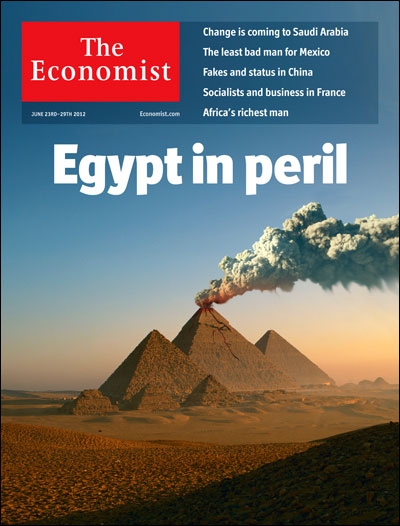
[Image from The Economist.]
To start, it is important to understand that The Economist has a long tradition of using artistic and imaginary discretion in its depiction of real world events. Oftentimes the publication prominently portrays cartoon caricatures of world leaders in symbolic interaction. Trends emerge as we see The Economist turn both Brazil’s Christ the Redeemer statue and Kim Jong Il into rockets. On other occasions, more prejudiced depictions come through. China is often depicted as a panda bear or dragon. Stories covering Iran’s research in nuclear technology often contain crude depictions of atom bombs.
The more recent image of the pyramids as volcanoes presents a problematic depiction of the situation and its implications.The top of a pyramid cracks, revealing lava underneath the familiar surface of the monument. Smoke clouds rising high above the landscape create an ominous effect for distant onlookers.The image is an attempt to represent the heated, potentially explosive situation in Egypt following the dissolution of parliament and the high-stakes presidential election.
However, depicting the pyramids as the representation of “Egypt” perpetuates a romanticized conception of Egyptians. For the editors and audience, the pyramids, built thousands of years ago, are what define Egypt. It is this construct of Egypt that is shown to be in peril. People’s livelihoods are not the primary concern. The concept neglects the thousands of years of relevant events and individuals changing the course of history, resulting in the present-day situation that is jeopardizing the human security of common Egyptians. The consequential jeopardy experienced by the Egyptian people is trivialized and its identity betrayed. Using this image is a missed opportunity to convey the uncertainty facing many Egyptians as well as a perpetuation of a false Egyptian identity.
We hope the editors of this renowned and reliable publication use better discretion when picking cover photos to prevent more misleading depictions of nations via idiosyncratic romanticized constructions. A good example of how this is done right can be seen with their cover story on Gaza and its corresponding photo. However, we find it difficult to fully express how problematic it is to Photoshop volcanoes onto monumental icons and present them as the face of entire societies without drawing this article out. Therefore, we thought it best to make our own.

These are troubled times, and it is not just Egypt that is in peril. June also saw the lead-up to the famous healthcare ruling, which carried implications for the legitimacy of the Supreme Court and for the presidential election.
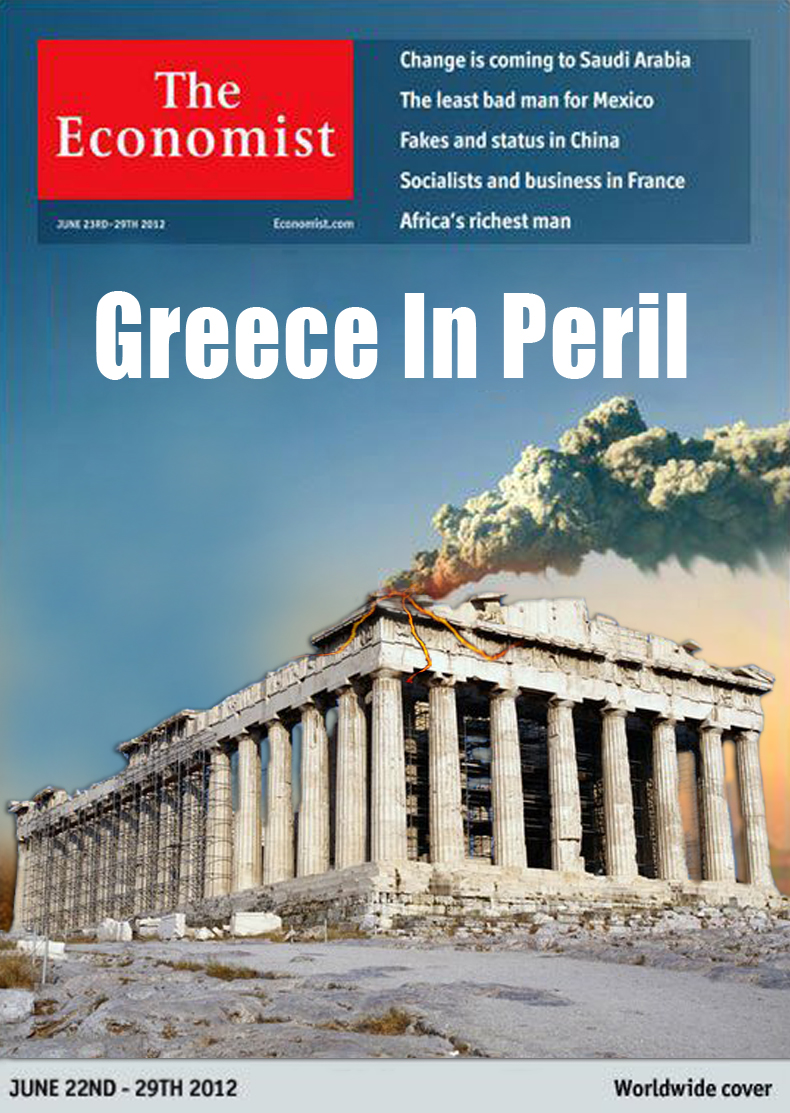
The unity of the European Union is also in peril, with debtor countries such as Greece risking default on loans that put the entire European Union in peril.
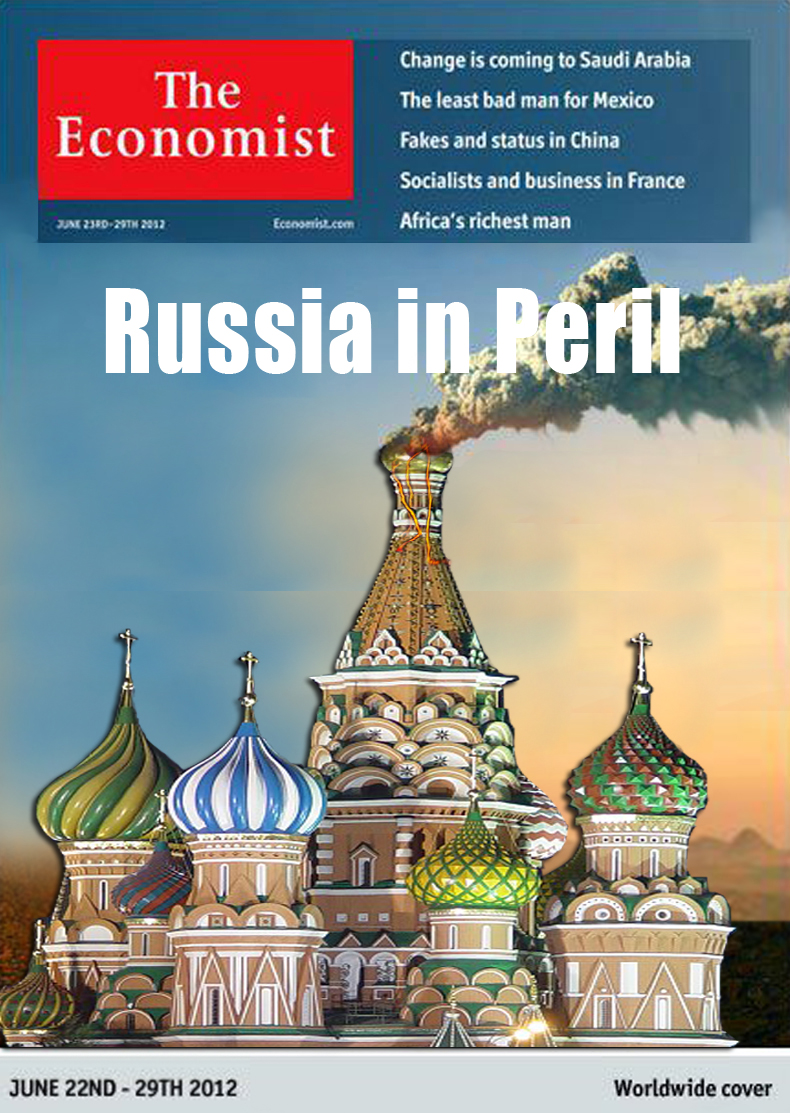
This year’s elections in Russia resulted in the return of another Putin presidency, but also mass mobilization and protests. The Economist did not believe the situation was perilous enough to respond with a depiction of Saint Basil’s Cathedral spewing out lava.