[This post is part of an ongoing Profile of a Contemporary Conduit series on Jadaliyya that seeks to highlight distinct voices primarily in and from the Middle East and North Africa.]
Jadaliyya: What do you think are the most gratifying aspects of Tweeting, and Twitter?
Sultan Sooud Al Qassemi: Twitter has become an invaluable resource for gathering information and following topics of interest. It has also become a method of directly communicating with individuals such as journalists, writers, activists, and artists whereas it was once difficult to get hold of them. On a personal level, I have been invited to speak and moderate at conferences and events because of my activity on Twitter, but perhaps the most gratifying aspect is when I finally meet in real life with Tweeps who had a big influence on me.
J: What are some of the political/social/cultural limits you’ve encountered using the platform?
SAQ: I have noticed that there are many people who are not used to adult debates and hurl personal insults and make incorrect generalizations. For instance, sometimes when people disagree with my work, they reference my family and the country I come from or go as far as making a false accusation instead of deconstructing the argument itself.
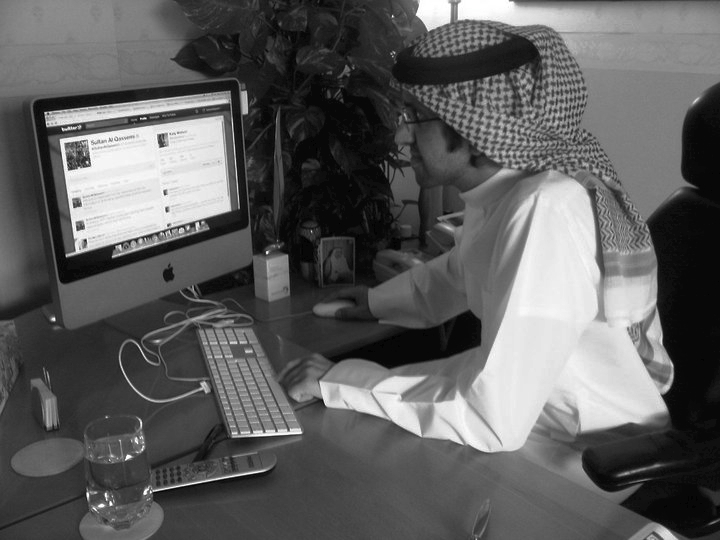
[Checking Twitter. Photo by Katy Watson.]
J: In your experience and use of Twitter, do you feel it helps mobilize or disorganize? Focus or crowd? Is it manageable or noisy? Can it help persuade and mobilize or does it turn everyone into a voyeur and spectator?
SAQ: Twitter mirrors the real world in the sense that there are those who merely follow (literally) and those who choose to lead. It depends on how a person uses this powerful tool which gives a voice to the voiceless and a platform that rivals state media.
J: What sort of tweets did you find to draw the most response and circulation?
SAQ: Of course the controversial Tweets are the ones that draw the most attention, whether they are about religion, sex, or even political activism in the Gulf. However, there is a lot of goodwill out there; I am always reminded of a Tweet I sent during the uprising in Egypt about how Egyptians were forming a chain to protect the Egypt Museum in Tahrir that was retweeted hundreds of times before I lost count.
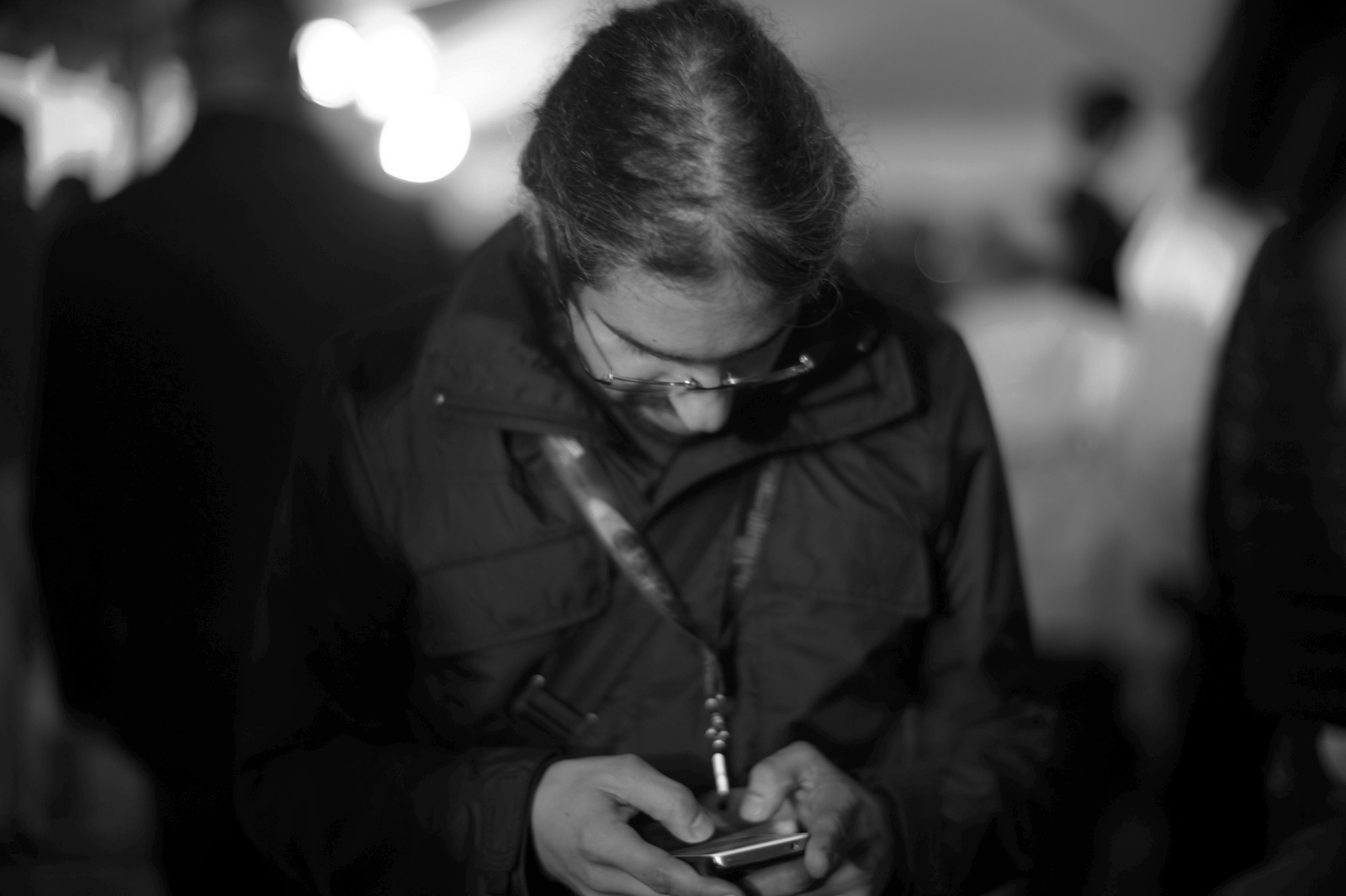
[Checking for controversy on Twitter. Photo by Mohamed Nanabhay.]
J: Are the hopes you expressed for the transformation of Arab monarchies roughly one year ago taking effect?
SAQ: There is no significant reform in any of the Arab monarchies since the Arab uprisings started. The Gulf states have either stood stagnant or taken a leap backwards politically.
J: Do you believe that Muhammad Morsi`s election will contradict the political tradition you described in which Islamists ignore the demands of liberal allies upon achieving power?
SAQ: Dr. Morsi has reneged on his promise to appoint a Coptic and female Vice President; his government has also been placing Islamists as cabinet ministers, governors, heads of state-controlled media and in other sensitive positions. I hope the Egyptian government realizes that this sort of short-term thinking may be detrimental to the future of Egypt where minorities are not represented fairly in government and administrative positions.
[Sultan Sooud Al Qassemi tweets at @SultanAlQassemi and blogs at Felix Arabia.]