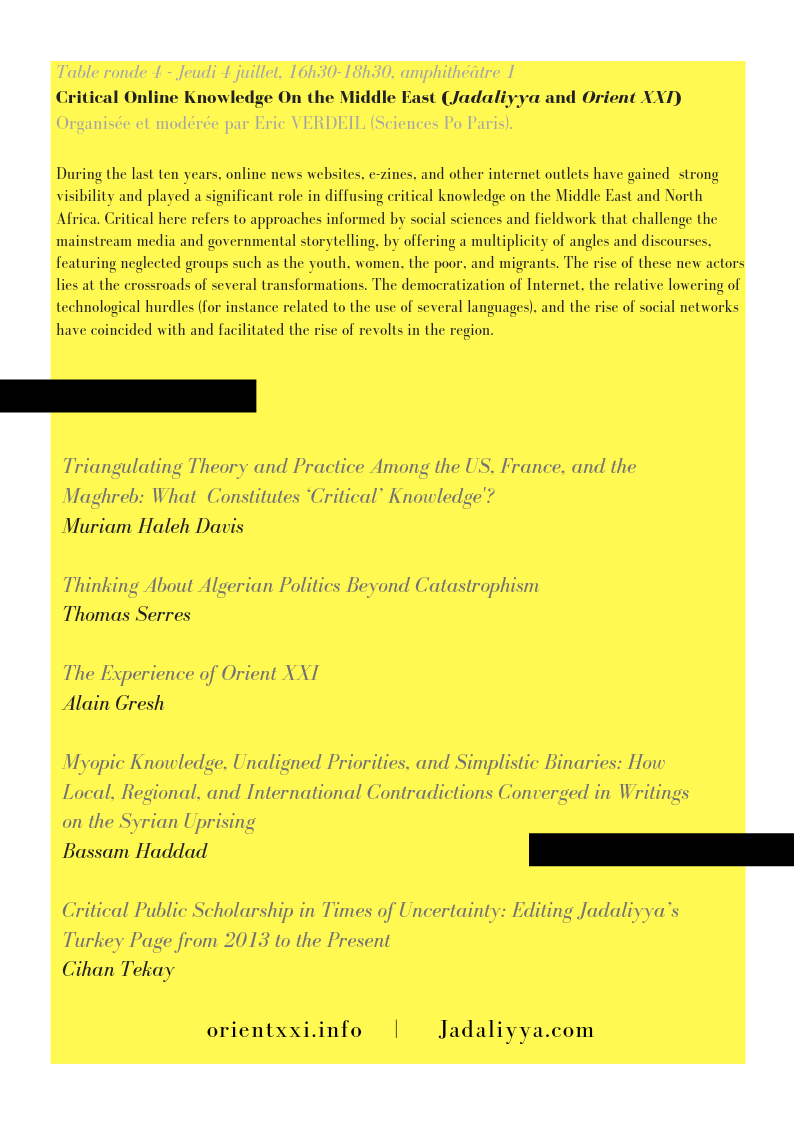
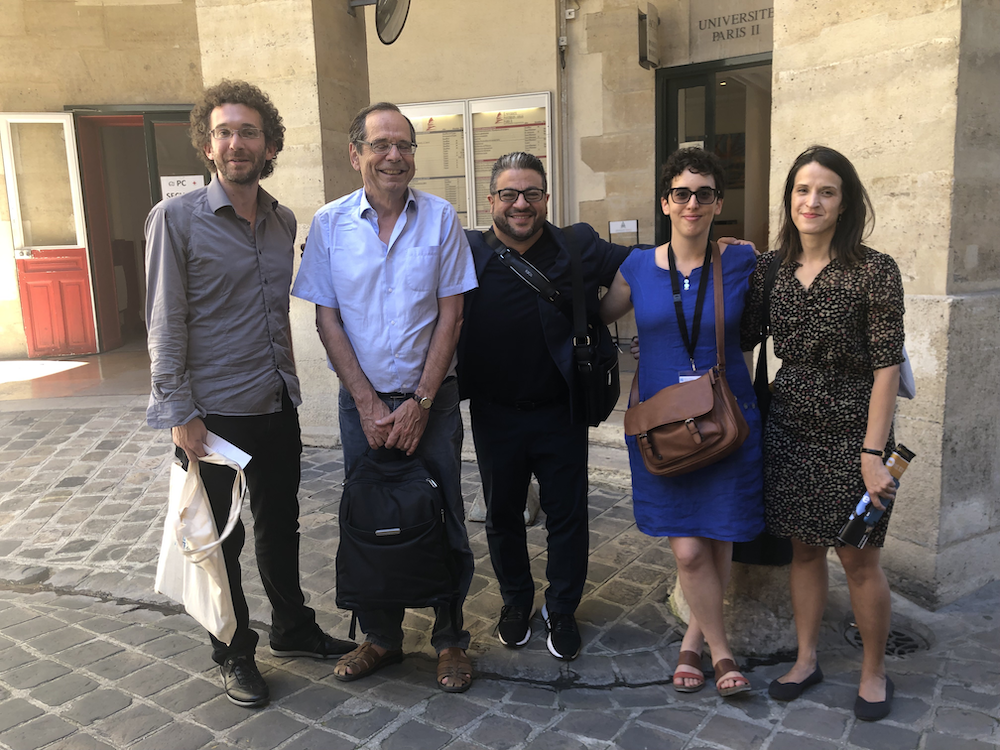
[This piece is part of a roundtable held in Paris last July at the 4th GISMOM Conference (July 2019) of the French network on the study of the Middle East and the Muslim World. This panel included lectures by Cihan Tekay, Muriam Haleh Davis, Thomas Serres, Bassam Haddad, Alain Gresh, and was organized by Eric Verdeil. All lectures from the panel will be posted in the coming weeks.]
The idea of launching this website came in the aftermath of the Arab revolutions, which had opened up new spaces and horizons for analysis. The revolutions had revealed entire sectors of Arab societies which had been invisible to us—particularly a new generation of young people who are active, committed, and open to the world. And yet the media coverage of this “zone” often remains incomplete, and sometimes superficial. It is focused on the conflict between “Islamists” and “secularists;” it offers no other approach. It totally neglects the current upheavals in those societies—the way groups and individuals are changing. Even in the area of politics, it pays too little attention to what is happening in the Arab world and its margins (i.e., Turkey, Iran, Afghanistan, etc.), often because the news media lack the means to cover the international scene.
We were convinced, when we launched the project in October 2013, of the importance of trying to apply to this huge geographical space—to the political, cultural, and social movements that are springing up there—the same rules of analysis we apply to the rest of the world. There is no such thing as a “Muslim” or an “Arab” exception.
We are not neutral. We take positions on many issues, such as Palestine, Islamophobia, and the War on Terror.
Orient XXI is neither a daily news website nor an academic organ reserved for specialists. We want it to be “in-between” publication, aimed at a large and varied public interested in the region for many different reasons. We want to appeal to students as much as people with relatives or friends in the Arab world, and to the men and women involved in the countless economic, cultural, and interpersonal networks linking the global North and South.
We want to open our columns to contributions from journalists, scholars, activists, diplomats, jurists, and writers—especially those who live in the region under discussion. We want to help their voices, so often inaudible, to be heard. We want to make viewpoints known which can provide a fresh look at the region.
Logistics
Each week, we publish five French articles (one every day), two Arabic articles, and one English. Some articles are translated into Persian. For the Arabic section, we try to feature Arab authors who write in Arabic; we prefer this to the translation of our own western writers. Since launching the website, 650 writers have contributed. I would guess that two-thirds are researchers, academicians, diplomats, etc., and one-third are journalists. On the whole, we pay very few of the authors—only the journalists, or for two out of five articles published.
We only publish online, and around 10,000 people receive our weekly newsletter. We have one experience of a co-publishing with the weekly Politis. We also developed a video channel on Youtube.
In 2018, according to Google Analytics, we had 907,638 unique visitors (up fifty-seven percent from 2017), of a total 1,502,701 visits (up fifty-three percent from 2017) and 2,292,434 pages views (up forty-nine percent from 2017). 2019 featured a modest five percent growth in readership. Fifty percent of our readers are in France, Belgium, and Switzerland. Another twenty percent are in the Maghreb, especially Morocco. The remaining readership comes from the rest of the world.
An Important Network
We have developed a rich network of partners in the Arab world. These include Maghreb-Emergent (Algeria), Nawaat (Tunisia), Assafir Al-Arabi (Lebanon), Mada Masr (Egypt), Mashallah News (Lebanon), 7iber (Jordan), and Al-Joumhouriya (Syria).
A year ago, we began a three-year joint program with them. We planned to publish six files during these three years. We have published two already: one on economic reforms in the Arab world and another on migrations. The next file will be on the use of the Arabic language, followed by another on the new Arab order.
We also have a program for training and residencies, where we help journalists from one country go to another country to work with the local media.
Our Means
Our ambitions are great, but our means are limited. We only have one paid employee who edits. We have renounced the idea of creating a subscription or paywall. We have no advertising. Half of our budget comes from our readers; the other half comes from institutions and NGOs as well as from selling our articles to other media outlets.
______________________________