[This article is the second in a four-part series. Click here to read the Preface; click here to read Part II; and click here to read Part III.]
“The Great Repair” is a collaboration of ARCH+ with ETH Zürich and the University of Luxemburg that resulted in two ARCH+ publications—The Great Repair: Politiken der Reparaturgesellschaft (2022) and The Great Repair: Praktiken der Reparatur (2023)—and an original exhibition in Akademie in Künste Berlin followed by a smaller one in Pavilion de L’Arsenal Paris. On 14 October 2023, the opening day of the Berlin exhibition, a roundtable entitled “Repairing the Irreparable: After the Earthquake” was hosted at the Akademie der Künste. The event was part of the School of Repair, the events program for the exhibition’s opening. Merve Bedir, Eray Çaylı, and Nilgün Yelpaze contributed as speakers, and Nazlı Tümerdem, who was part of the exhibition’s curatorial team, moderated the event. Even though it was related to key themes of the exhibitions such as (re)construction, demolition, waste, and solidarity, none of the works in the exhibition focused particularly on the 2023 Turkey-Syria twin earthquakes. Therefore, it was essential to include this event in the exhibition program so that we could have a platform where we could discuss these themes and unfold what they might mean through the lens of the earthquakes. The text below, the first in a four-part series, is a transcript, edited for clarity and length, of this conversation on “repairing the irreparable.”
Nazli Tümerdem: The endeavor of a great repair spans many scales and interweaves together manifold actors, institutions, and processes. Discussing the act of repair in the context of a post-disaster geography makes this undertaking even more challenging, if not entirely unattainable. Especially when this geography and its racialized communities have been burdened by decades of unrest and violence, and at the same time, governed by a growth-oriented authoritarian state. While this disaster had a cataclysmic impact on an area half the size of Germany, it also crystalized ingrained socio-political and socio-ecological entanglements of the region.
In this sense, we will discuss the possibility of an equitable and ecological reconstruction project that strengthens the already formed solidarity networks, and thus more democratic forms of governance at different levels. We will also ask what this might mean in terms of disaster preparedness and relief policies for Istanbul and its periphery, which are expecting a high-magnitude earthquake in the near future.
The Great Repair exhibition was organized around seven chapters with themes ranging from daily care work to decolonizing knowledge, and from tools of repair to repairing the practice of architecture. One of the chapters was titled Working with the Existing and included the contribution “Concrete: Cosmetic and Care” by THEMA, Theory of Environment and Material in Architecture Lab EPFL. This work explored the question of how to handle the inherited mass of concrete covering the planet, which is constantly expanding. Taking concrete’s “fragile hardness” into account, they explored ways to maintain it, care for it, and repair it.
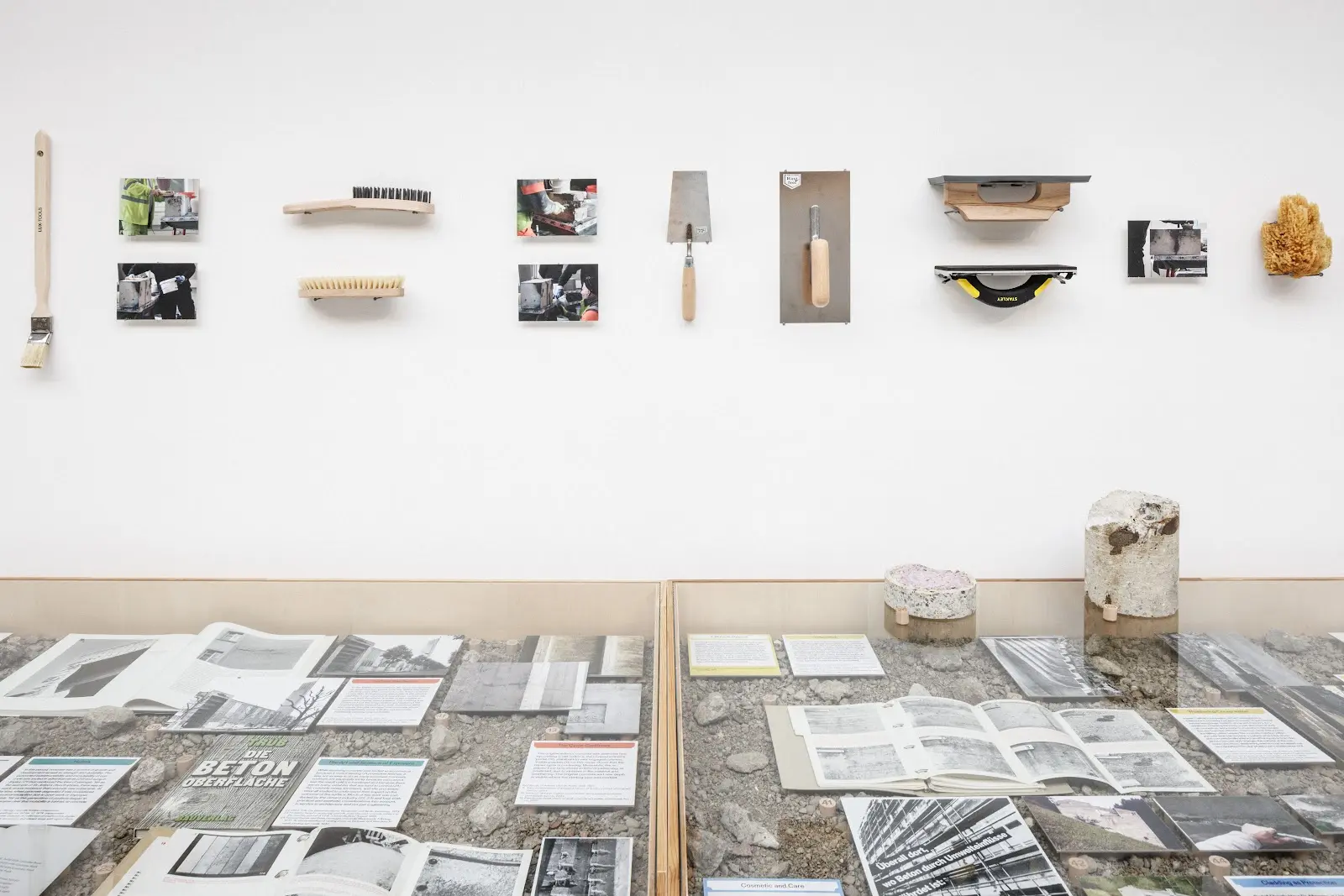
Figure 1. View of Concrete: Cosmetic and Care by THEMA from The Great Repair Exhibition in Paris. Credit:© 11h45
Another chapter was titled Keeping the Scars Visible. Bas Princen’s work, “Giotto’s Fragments,” is also in this chapter. His photography is about the frescoes in the vault of Basilica di San Francesco in Assisi, which was destroyed by an earthquake in 1997. Around 300.000 pieces were salvaged, cataloged, and reassembled. However, there are still thousands of pieces that could not be matched. In this sense, the reconstruction of these frescoes is actually about their inherent irreparability, about the fact that you cannot return to an original and undamaged state of a body, of an object, of a building, or of the planet itself. By photographing these fragments, Bas Princen gives them new meaning, and independent lives as abstract works of art. Yet, this is only possible if you have a distance, not just temporal and spatial but also personal, to the actual disaster and its intricacies. Considering the scale and impact of the 6 February earthquakes that happened in Southeastern Turkey and Northern Syria, and keeping in mind their inevitable aftermath directly linked to the region’s socio-political and socio-ecological entanglements, it is not really possible to have such a distance. Not yet. What are your opinions on this? Do you think it is actually possible to repair, reconstruct, and/or heal, after such an event?
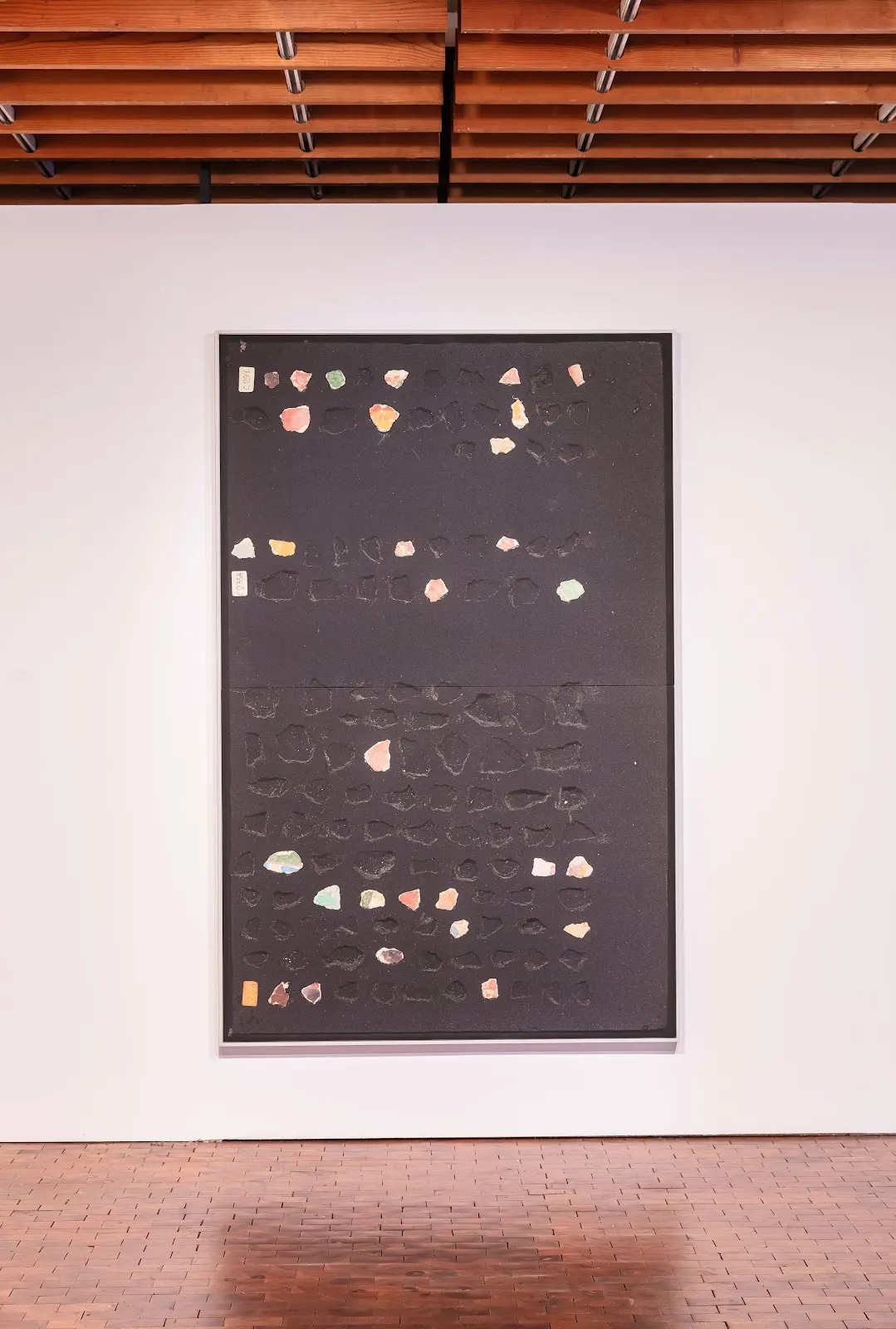
Figure 2. View of Giotto’s Fragments by Bas Princen from The Great Repair Exhibition in Berlin. Credit: David von Becker
Eray Çaylı: Before we discuss the possibility of repair, we must clarify what kind of repair we are talking about. If there was a Turkish state official sitting here, they would tell us, “Yes, of course, repair is possible. If anything, we have been pursuing a project of repair for more than a decade now.” Turkey has since 2012 had a law called the Disaster Law that promises to disaster-proof the country and, since 2009, a state agency called Directorate of Disaster and Emergency Management (AFAD). They would tell us that they have been busy at work repairing earthquake-prone areas and buildings through demolition and reconstruction. Why, then, we, here, would rightly ask, did we witness the disaster that we did in the wake of 6 February?
My answer is that we witnessed this disaster because the state’s approach to repair has been what I would call “repair without reparations” and in some cases even “repair against reparations.” True repair requires reparations. The repair necessary in many parts of the world facing environmental breakdown today is one that must prioritize the histories that are now the subject of demands for reparations. This is a kind of repair that centers systemic injustices and the longstanding struggles for justice they have been met with.
Saying repair is only possible by prioritizing reparations is, of course, to use the lexicon of recent debates on better-known colonial/postcolonial/decolonial contexts of racialization. We must be mindful here of the fact that we’re speaking in the English language and communicating through concepts that originated in Anglophone and, to a certain extent, Francophone debates. We run the risk of getting lost in translation. Neither repair nor reparation translate smoothly into the context of Turkey where the 6 February earthquakes took place. So, what is the context-specific counterpart to the nexus of repair and reparation that I am trying to advocate? I would say it is statuslessness—bêstatubûn in Kurdish and statüsüzlük in Turkish. The region affected by the earthquakes is describable as an Alevi, Kurdish, and Armenian homeland. In Turkey, Alevis still have to pay taxes for a Directorate of Religious Affairs and acquiesce to their kids taking mandatory religion lessons–institutions and mechanisms that do not represent or serve their faith. Kurds are still denied political status despite decades of struggle and promises. And the dispossession, displacement, and mass murder of Armenians is still pending the recognition of the Turkish state as a genocide. So, it is the denial of status that we must put front and center in our debate on repair in this context.
In sharing these thoughts, I am basically reiterating the premise of a special issue that I was invited to edit in 2021 on spatial justice and earthquakes by the Istanbul-based independent research center Mekanda Adalet. My framing of the special issue aimed to push against the limits of a mantra that tends to be repeated in critical circles whenever a disaster happens: there is no natural disaster and that all disasters are political. To my mind, the idea that disasters are political is no longer a radical one. If anything, it is now integral to disaster risk and resilience policies in the modern liberal mode. In Turkey, for example, the state’s National Earthquake Strategy and Action Plan for 2023, finalized in 2013, avowedly aims “to create a society that is resilient to and prepared for earthquake risk” and to use “participatory” methods that engage “multiple social actors.” These emphases on society and participation demonstrate that now the state itself approaches earthquakes as social and political. The question then becomes exactly how and where the politics of disasters is constructed, conducted, and enacted. We must strive to specify at every turn what sort of politics we have in mind when we say all disasters are political.
In this sense, suggesting (as many critics in Turkey have tended to do) that earthquake preparedness mechanisms like the Disaster Law are simply a way for the state to fuel speculative development and rentierism by exposing urban spaces to wholesale demolition, and reconstruction does not quite suffice to get at the political specificity I am talking about here. An all too narrow focus on rentier speculation assumes that capitalism operates in the same way everywhere and everywhen, from, say, San Francisco and London to Istanbul and Jakarta. Focusing our critique of state-led resilience only on rentierism overshadows context-specific and systemic injustices as well as the struggles for justice mounted against them. It subsumes these injustices under global processes and portrays them as out of the reach of political work on the ground.
Instead, when one does account for context-specificity, one realizes that disasters like the 6 February earthquakes are political already before they take place. Because disaster preparedness policies that are in place in this context treat environmental resilience as a national security imperative that securitizes the nation by marking racialized communities as threats. Areas worst-hit by the 6 February earthquakes that continue to host significant Alevi and Kurdish populations are epicenters of state-endorsed racialized violence. Sites of anti-Alevi violence in the late 1960s and 70s also overlap with where the earthquakes have had the worst effects, such as Malatya, Elbistan, or central Maraş. More recently, Alevis from Antakya—a city now worst-hit by the earthquakes—were a prominent demographic among the victims of police violence during the 2013 Gezi Park protests. Moreover, in 2015-16, the state’s war on autonomy in Kurdish towns and cities included an amendment to the Disaster Law that enabled its use for displacing residents in a region that now partially overlaps with earthquake-hit areas. Many earthquake-hit areas are central to the history of the Armenian genocide, too, ranging from Musa Dagh in Antakya to Zeitun in Maraş.
It is due exactly to these kinds of violent histories that the fallout from the earthquake has unfolded the way it has. In the Kurdish-Alevi town of Bazarcix/Pazarcık in Marash, the state has expropriated donations collected by community organizations. There’s no drive for speculative rent here, but a national-security reflex that dovetails with decades of state-endorsed and racialized violence whose epicenters include exactly this region. One of the first measures the authorities took within hours of the earthquakes was to prevent the propagation of dissent by reducing bandwidth, a measure that cost lives at a time when people trapped under the rubble were still trying to make their voices heard via cell phones and social media. Toxic rubble removed from the collapsed structures has been dumped in Kurdish-Alevi villages. Fields farmed by landless peasants in Adıyaman/Semsûr have been expropriated for emergency housing under a new law. In the same city, the historically non-sedentary Dom community have been discriminated against in housing and food provision on grounds of the racist stereotype that they should be used to eating whatever they can get their hands on and sleeping wherever they lay their head. And widowed women and orphaned children rescued from under the rubble have gone missing; they’re rumored to have been abducted by members of sex-trafficking and organ-trafficking gangs including those disguised as law enforcement.
Therefore, it is only by coming to terms with the disaster as the spatial legacy of an at-least-a-century-long violently racialized and colonially-grounded history of nation-state building that we may begin to think about repair. It is only by recognizing—reinstating, so to speak—the political statuses of those communities who have been denied their due status as a result of this violent history that repair may begin.
Merve Bedir: I want to start by acknowledging the people in the region, who, despite being subjected to perpetual displacement and dispossession, remain firm in their commitment to human rights and the rights of beings, and living together.
Eray makes an extensive analysis about the socio-political conditions that explain the magnitude of the earthquake’s destruction. There are a few more things to add to that. The first is about the rapid urbanisation and the financial economy based on building construction sector that has governed Turkey through the changes in the laws that facilitated an acceleration of urban sprawl as well as a reconceptualization of the rural as urban. This means cities/ built environments of cement/concrete (including asbestos), as well as a new citizenship.
Concrete is the primary material and system of contemporary construction that no one questions, while the knowledge of so many other methods of construction in the region is unseen/unused/forgotten. When building in concrete, building heights and structural calculations, ground composition, quality of construction are extremely important factors. You can’t build multi-story concrete buildings with shallow foundation on agricultural soil or use lower grades of rebars inside columns. Collapsing concrete is deadly, unlike, for instance mudbrick, which is the local construction material. This is what we witnessed in these earthquakes.
Turkey has a history of earthquakes: in 1999, in the Marmara region a 7.6 Richter earthquake caused immense destruction. Bazarcix/Pazarcık, the epicenter of one of the main earthquakes of 6 February, is a geographical base for national seismic modelling, as well as structural calculations of buildings. The ‘model’ in this case refers to the maximum known limits of a disaster. This is to say that there are good scientists and available technology to monitor, analyze, and warn for the possible disaster, in order for other responsible agencies to prepare for it. But this knowledge didn’t inform where and how to build.
As to what I mean by new citizenship, I’d like to refer to Ayşe Çavdar’s essays, A Death Reminiscent of Suicide I and II, in which she analyzes the earthquake’s impact and expounds on the emergence of a new urban financial/religious class that has been increasingly active as construction developers and citizens as consumers. The collapse of the new housing in the center of the city of Gaziantep, a site not as close to the fault lines, connects to such contemporary dynamics. Neoliberal economy being dependent on construction means the urban sprawl will accelerate without time and energy invested in the checks and balances of desire, necessity, and self-control by the different agencies related to urbanization. Citizenship being contextualized based on consumption means an endless supply and demand cycle of this system of newness and artificiality, instead of thinking on housing for everyone for shelter, safety and security.
The deep capitalist corruption of the last decades; the entrepreneurs in the lucrative construction industry, or the building inspection mechanisms that overlook the building standards, or the citizens who took out large mortgages to live in the new apartments, more ‘modern’ buildings, letting concrete construction take over and forgoing the ancestral knowledge of their geographies about where and how to live. So, I dare to say that this is a collective suicide, in which there are many casualties, and many who are complicit.
My second point is about how colonial infrastructures of the past are entangled with the corruption in the present. For instance, Islahiye, one of the peripheral districts of Gaziantep that was completely destroyed by the earthquake had been moved to its current location at the turn of the previous century to make way for the Berlin-Baghdad railway construction, a failed infrastructure project by the German and Ottoman Empires. In the new location, the soil quality was good for agriculture whereas the ground was firm enough only for one- or two-story mudbrick houses, certainly not for contemporary concrete buildings. This relocation destroyed the agricultural land at the time, and seeded future destruction as it opened the land up to the eventual construction of high-rise concrete buildings, which collapsed in the recent earthquakes.
My third point is about the racism and discrimination against Arabs, Doms, and other marginalized groups. During the rescue operations in the aftermath of the earthquakes, many Syrians would not call for help from under the rubble, fearing that they would not be rescued, or if they were to be rescued, fearing what would happen to them afterwards. There is a deepening racism and discrimination against migrants from Syria and the nomadic Dom people in Gaziantep, and I’m very worried about what social tension this could lead to. Dom people around Gaziantep have been kept sheltered in tents while everybody else was being transferred to containers.
The predicament of having to endure disaster after disaster, be it authoritarian regimes, the COVID pandemic, the many wars and displacements, the fires and floods related to climate crisis, and now the earthquakes is an experience tantamount to further extinction of peoples, cultures, and histories under the continuation of colonialisms operating in the region.
Other Pieces in this Roundtable
Solidarity: Part II of a Roundtable on Repairing the Irreparable after the Earthquake by Merve Bedir, Eray Çaylı, Nilgün Yelpaze, and Nazlı Tümerdem
Healing: Part III of a Roundtable on Repairing the Irreparable after the Earthquake by Merve Bedir, Eray Çaylı, Nilgün Yelpaze, and Nazlı Tümerdem