[This article is the fourth in a four-part series. Click here to read the Preface; click here to read Part I; and click here to read Part II.]
Nazlı Tümerdem: The situation after the earthquake was so overwhelmingly devastating that it almost seemed to be beyond repair. At the same time there was so much solidarity and so much bottom-up mobilization around care and maintenance, which created a kind of hope for the future in an area that seemed irreparable. Could these recently formed networks be a pathway to socio-ecological, material, and psychological healing?
Eray Çaylı: I wish to return to some of what I said at the beginning and reiterate that the problem is not that this is a region beyond repair but that the repair that communities themselves are doing is prevented, confiscated, foreclosed, and cut off.
Take the case of a former political convict I know, who did time in the infamous Diyarbakır Prison no.5 in the post-coup period of the 1980s when the prison effectively served as a torture center for Turkifying the Kurds. He now lives in Malatya and has taken part in the relief effort. He likens surviving the earthquake (not individually but collectively: through the work of solidarity and mutual aid he has taken part in) to surviving the Diyarbakır Prison and the torture that took place there in the 1980s. This suggests that in his experience surviving political violence and surviving earthquakes are inextricably linked.
This link is evident in many of the aid and solidarity efforts we have witnessed in the wake of 6 February. In Hamburg, where I recently moved to take up my current academic position (coincidentally, just a week before the earthquakes), the Alevi community has started a scholarship program for youth in the earthquake-hit region. Feminist Solidarity for Disaster Relief traveled from western Turkey, from places like Istanbul, to the earthquake-hit region and taken part in the relief effort with a particular focus on those long antagonized by patriarchy: women, children, and non-heterosexual individuals. An LGBTQ Earthquake Solidarity network was founded with queer organizations already active in the region. Pınar Üzeltüzenci’s interviews with some of these networks show that women who used to be economically independent are now denied this independence due to seemingly minor issues like no longer having access to ovens where they baked the bread they then sold to make a living. The products that women and children use such as combs, toys, shampoo, and feminine hygiene products are deemed luxury items and are not prioritized in the official relief effort. These are the patriarchy-driven issues that feminist and queer organizations have worked on alleviating. On the fortieth day, women in Samandağ organized a march with basil branches and incense that have long been used in this Arabic-speaking town and its environs for mourning the dead. The slogans they chanted, such as “this is not a disaster; it is a massacre” and “we are here; we won’t be leaving,” demonstrate the importance of situating the earthquake within a long history of racially violent state policies. Roma Memory Research Association known as Romani Godi have been addressing the marginalization of the non-sedentary communities within the relief effort.
To reiterate, what is striking about many of these initiatives is that they are not new. They have long been here. In contrast, there were indeed new or relatively recently founded aid organizations like Ahbap, which received extensive media attention. The emphasis tended to be on how these organizations were reliable because they were politically neutral. They were equidistant to all sections of society. To my mind, this sort of emphasis on political neutrality is a slippery slope. Of course, my point is not that I am personally against the likes of Ahbap. I would even acknowledge that their work has had a positive impact in earthquake-hit areas. But to foreground them on grounds of their political neutrality implies the following: All the other organizations that are indeed motivated by specific social and political concerns and that have long been around are not to be trusted because they are biased. The point must instead be that, just as disasters are political in the sense that they take place within histories of systemic injustices, aid must also be approached as a markedly political field of practice as well.
Nilgün Yelpaze: Feminist Solidarity for Disaster Relief was able to respond quickly because it evolved within an already existing feminist movement. The feminist movement in Turkey is not a stranger to responding to the state and patriarchy-induced violence with solidarity and care work. Previous experiences include collectively following court cases of femicide and sexualized violence in various places, organizing platforms and initiatives in response to the ongoing war, such as the Initiative of Women for Peace, and so on. On the ground, the feminists collaborated with existing Kurdish women's organizations such as the Rosa Women's Association and the TJA (Free Women's Movement), as well as other networks and organizations in Hatay province.
However, in addition to the experienced activists of the feminist movement, new volunteers also responded to the call and joined the groups that stayed in the earthquake zone regularly. Some of these volunteers encountered the Kurdish region and language for the first time. Overall, I believe that such encounters are effective in bringing about the healing we all need, but it is also critical to leave behind the longstanding baggage of internalized racism and colonialism towards the region at an acutely traumatic moment. Like in similar colonial contexts, the dichotomy between tropes such as “white Western feminist savior” and “Eastern male underdeveloped victim” has to be reflected upon over and over again. These encounters, I believe, are very vital and useful, but they sometimes lack the toolbox of a decolonial perspective. In order to learn from the decolonial feminist approaches already existing in the region, it would be important to listen to, for example, the Kurdish women’s movement who had already done a lot of work in fighting sexism within their own community. Their movement had gained valuable experience, particularly through local governments. However, in today's political climate, envisioning such a debate is nearly impossible. Reasons such as state-induced violence in the last eight years, trustees/caretakers appointed to replace elected mayors, and the arrest of local activists have already set back women's successes and reinforced gender-based violence in the region.
My own take on the issue beyond the Feminist Solidarity for Disaster Relief Network is that these experiences would allow us feminist subjects to be an active part of healing by doing. All the work that has been done by the Feminist Solidarity Network is radical care work manifested in details small and large: for example the container showers brought to the camp were too high for the elderly to step in, the route to the showers was very muddy so people would get covered in mud just after taking a shower. So the feminists paved the walkway to the showers with stones, and built a step for older women to climb into the container.
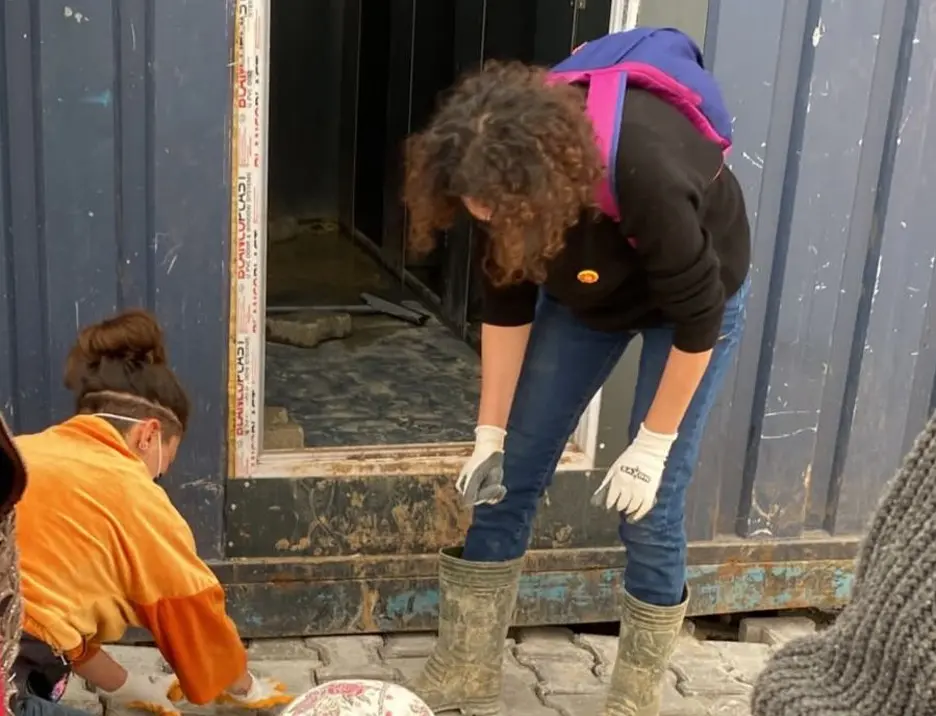
Figure 1. Feminist volunteers building the pathway to the bathroom for elderly women. Photo: Feminist Solidarity for Disaster Relief.
It is very symbolic in terms of the question you ask, because sometimes we actually have to pave the pathway to socio-ecological, material, and psychological healing ourselves. The opposition movements often lack the experience of “doing,” and fail to go beyond criticizing the existing mechanisms. The experience of building pathways with your own hands is very important at such moments. Instead of limiting the political discourse to the exposure of the inadequacies of the state authorities, locally deciding what you need and how you need to do it and taking direct action is actually a form of “do-it-yourself justice” in the sense Joost Jongerden writes about. Knowing how to build an actual walkway comes in handy when we want to build pathways to healing.
I do not want to romanticize things, suggesting that the earthquake actually created such a moment, because it did not. It only created massive destruction, but these images and moments of micro-solidarity have, in my opinion, the potential to imagine how an ecological and feminist living space could look like and how I can learn by “doing it” in the “here and now” without calling state or authority figures into action. All the observations of the Feminist Solidarity that I mentioned above are hints for us about what the problems are and what needs to be challenged during a healing process. Therefore, in my opinion, these networks are promising agents for the necessary healing and repair, but in terms of the consequences of authoritarian state violence in the current (in the political and physical sense) landscape, they are not sufficient.
Nazlı Tümerdem: There is a group of scholars who emphasize that the reason so many buildings were destroyed during the earthquake, was not because Turkey did not have good building codes. To the contrary, when AKP came to power in 2002, as a reaction to the poor governmental response to the 1999 earthquake, they actually devised very good building codes. However, the codes weren’t enforced. These scholars point to the fact that it was the choice of the central government not to enforce these building codes. Cheap buildings and infrastructure are a way to quick wealth generation, which is a deliberate development strategy – what is your take on that?
And if we do commit to an equitable and ecological repair project that prioritizes reparations, what does it entail in an earthquake-affected region inhabited by extremely racialized communities? And how could this repair project unfold for Istanbul and its hinterland, which is expecting a high-magnitude earthquake, in terms of disaster preparedness, relief policies, and reconstruction?
Eray Çaylı: The repair project you are talking about requires politically driven expertise plus context-specific, patient, and processual work. Here I’m returning to an article that we published in the special issue on “Spatial Justice and Earthquakes” that I mentioned earlier. The article is on the Lice Earthquake of 1975 and was published a few years after the earthquake. Written by human geographer Ian Robert Davis, the article is, in fact, the review of a report written by US Air Force lieutenant and physical geographer William A. Mitchell on the Lice Earthquake. But, above all, the article is an excellent critique of reconstruction projects as they are conventionally done at the interface of national and international actors in post-disaster regions. It questions the tendency to treat post-disaster regions as labs for innovation. Davis criticizes Mitchell’s analysis of the post-disaster situation. In his report, Mitchell says the aftermath of Lice shows how underdeveloped Turkey is. Davis tells Mitchell, hold your horses; I look at Turkey and see that it is indeed quite well off compared to many other countries and quite well prepared especially in the field of disaster relief. The reason Lice has suffered so much from the earthquake, Davis says, is not because of an all-encompassing lack of development in Turkey; it is because of the specific dynamics at work here, involving discriminatory structures.
Mitchell’s misrepresentation of the situation in Lice as one of Turkey’s developmental deficits continues to echo today in critiques of the earthquake that emphasize lack of liyakat (Turkish for “merit” as in meritocracy) and disrespect for bilim(Turkish for “science”). In the main opposition party CHP’s report on the 6 February earthquakes, for example, the then party leader Kemal Kılıçdaroğlu’s foreword states that the chief lesson to be drawn from the disaster is Turkey’s need for “a mindset shift” towards “liyakat” and “bilim.” Emphasizing merit and science in such a context means losing sight of longstanding injustices because it confines the problem to the past two decades of AKP rule alone. Identifying the current regime as unmeritocratic exceptionalizes Erdoğan and the AKP, thus absolving longer-standing systemic dynamics including the predecessors and any potential successors of the current regime. Ultimately, it preserves the idea that power and agency rest solely with the governing authorities and justice can be delivered top-down, rather than granting communities organizing against injustice this kind of power and agency. Emphases on science evade the question of whether and how science can serve justice in a context where institutional academia is in the grip of state and market forces with thousands of academics deprived of their livelihoods in Turkey alone.
In the special issue on “Spatial Justice and Earthquakes” that I mentioned earlier, our aim was to shift the focus away from precisely such emphases on meritocracy and science. This is why we included the voices of those working on the ground such as members of the Neighborhood Disaster Volunteers network, Earthquake Victims Solidarity Association, and Union of Neighborhoods targeted by urban renewal, to name a few. We also published an interview with members of an association called Yer Çizenler Derneği whose name translates as Drawers of the Earth—a group of cartographers in Turkey who came together in the aftermath of the 2017 Aegean Sea earthquake to create an open-source cartography platform with the kind of geological and geographical information that is crucial in the context of disaster prevention. They use their science not with an unquestioning faith in a decontextualized and abstract universal scientificity but rather with particular social and political concerns around justice and injustice that have brought them together. Such already existing work involving residents as well as experts is the antidote to establishment-preserving references to science or meritocracy.
Also, one must say that a justice-oriented use of urban space will also automatically be a disaster-proof one. Before the central government confiscated municipalities in Turkey’s Kurdistan, some of which fall within the earthquake-hit region, these had been run by democratically elected Kurdish mayors who had begun to implement various justice-oriented urban policies. In Amed/Diyarbakır for example Gültan Kışanak had launched a program to grow vegetables in empty patches of the city’s newly developing neighborhoods–in spots like pavements and sidewalks. The program was especially geared towards involving women as growers and stewards of these patches and planned to distribute the produce grown here also in a justice-oriented manner. It built on the history of Amed and especially of its historic center as a food-sovereign town with multiple variously sized gardens scattered across it. A food sovereign city is also one prepared for disasters. Place-specific knowledge is, therefore, key in reimagining resilience as a grassroots practice.
Indeed, despite the confiscation of municipalities and everything else that has happened in the context of what the state calls “counterinsurgency,” the Kurdish political movement’s organizational strength stretching back decades and the urban practices grounded in place-specific knowledge that it had begun to implement under the Kurdish mayors are among the reasons why Amed has emerged relatively unscathed from the disaster. In contrast to this grassroots approach, the state offers the Disaster Management Agency, which set up a tent city on the floodplains of the Tigris River. Now, of course, these floodplains no longer get flooded the way they used to prior to the construction of dams on the Tigris from the 1980s onwards. Nevertheless, with climate change intensifying, the city has experienced increasingly heavier downpours. And dams do break under the pressure of these downpours, as we indeed saw in late 2018 when a floodgate collapsed and the riverbank just down the hill from central Amed was flooded. So the only horizon of resilience that the state offers is to do what it has always done: to approach the land it wants to dominate and subjugate in the abstract as if it was sitting on a drawing board where the state can drain floodplains if it wants to and redirect river flow the way it sees fit in the name of water management and river improvement, and then place disaster survivors in dried up riverbanks. Of course, those with place-specific knowledge know better than this terra nullius approach to the region that divorces geology and physical geography from social, political, and cultural geography and that informs existing disaster preparedness policies.
In the case of Istanbul, we must again question the prevalent tendency that subsumes the disaster under one large-scale process or another—by arguing, for example, that Turkey has no disaster preparedness policies in place (often considered a symptom of the current regime’s disrespect for meritocracy and for science) or that the urban renewal programs pursued under the Disaster Law are simply the latest phase in the country’s integration into the neoliberal global rentier economy. Sadly, the elected authorities currently in charge of governing Istanbul, although they come from a different political party, exhibit the same tendencies.
A case in point is the Earthquake Mobilization Plan that the Istanbul Metropolitan Municipality (run by a member of the main opposition party CHP or Republican People’s Party) announced within weeks of the 6 February earthquakes. The plan positions science and technology above and beyond politics even as it seems to rethink top-down resilience by engaging urban residents at the neighborhood level. It does propose various ways to use science and technology for enhancing earthquake resilience but without much elaboration on socio-political implications especially regarding the question of epistemic justice. Even as the plan proposes to mobilize ordinary residents, there is no mention of how already existing practices of sociopolitical organizing and grassroots initiatives will be engaged. Therefore, the plan risks becoming a classic case of resilience in the modern liberal mode that places unquestioning faith in the supposedly inherently progressive potential of science and technology and that organizes the socio-politics of resilience top-down rather than from the ground up.
Nilgün Yelpaze: I would like to name some issues that have been identified specifically in the Adıyaman Women's Tent, yet are applicable to almost the entire earthquake-zone. These include women becoming more vulnerable to violence and abuse, and being restricted to unsafe areas due to inadequate lighting; their inability to access distant locations in tent cities for toilet and shower needs, which in turn leads to diseases, hygiene problems arising from the absence of toilets and showers; their lack of access to birth control methods and means for terminating unwanted pregnancies; their being restricted to the inside of tents, losing social networks, not finding a moment to process their own feelings and grief due to having to focus on caring for the children, the elderly, and the men; the insufficiency of mechanisms to observe and prevent violence in tent cities; limited privacy; extra childcare due to lack of schools, and so on. These are just some of the problems identified and communicated by feminists or issues that one can comprehend by spending half a day in any tent city.
In addition to gender, factors such as ethnicity, language, religion, and migration experience also contribute to the earthquake’s devastating impact. As previously mentioned, there is a significant social bias and discriminatory practices against Syrian and Rojava immigrants and the Dom community. Numerous refugee families reside in the tent city where the Adıyaman Women's Tent is located alongside several other institutions and organizations. However, refugee earthquake victims have conveyed that they were unable to call for help during search and rescue operations because they could not speak the language. Furthermore, during the limited aid distribution or service provisions, native Kurdish speakers from Adıyaman have faced discrimination, just as they have for decades, alongside the refugees and/or immigrants who speak Kurdish or Arabic.
Therefore, a just and inclusive reconstruction process, starting initially with emergency relief efforts, could potentially address these issues in an intersectional manner. It could be multilingual, multicultural, inclusive, and accessible. Particularly, a gender-focused understanding can be achieved solely through persistent efforts. The necessity for safe, accessible, healthy, and well-lit living spaces for women and LGBTQI+ individuals becomes all the more evident in a scenario where everything is destroyed. In this sense, the experiences of the Feminist Solidarity for Disaster Relief could also be used in preparation for what might occur in the aftermath of a possible disaster, let’s say, the one that is expected in Istanbul and its hinterland. The process of “gendering the earthquake” proposed by the group has been very informative on the immediate and invisible needs of women and LGBTQI+ individuals during disasters. We can base our reconstruction efforts on acknowledging this reality. However, with the previous question in mind, sometimes we might need to build some of it with our own hands rather than solely by relying on the state.
Merve Bedir: In this region, disaster after disaster, certain people are asked to be more resilient, to endure the pain, but what is happening to them is extinction--and a targeted one at that. Each disaster amplifies, deepens, and expands the impact of the previous one. Demanding resilience from the people, who already live in a mode of survival, is another form of oppression. The failure to avoid the disasters and the anemic response to each shows a failure of the nation-state and an obsolescence of international agency on one hand, and the rise of peers and communities organizing in mutual aid on the other. In another conversation I was part of on the earthquakes organized by the Chamber of Architects Izmir, Mustafa Kahveci referred to this imminent space a negative commons, discussing how it is not the state that exists in the aftermath of a disaster, but the immediate networks of solidarity that create (temporary) commons among concrete rubble. To me, the cases that Nilgün mentioned, or the case of Kitchen Workshop or the work of Kırkayak Kültür are acts of commoning, and where repair could start from, to register the trauma so there is a possibility to reconcile when it’s time, to turn to the marginalized and support them. These are the acts to depend on for survival, and invest further towards infrastructures of collective futures. But how to sustain them? How to transform them from people’s structures of survival against extinction, to people’s infrastructures of collective futures?
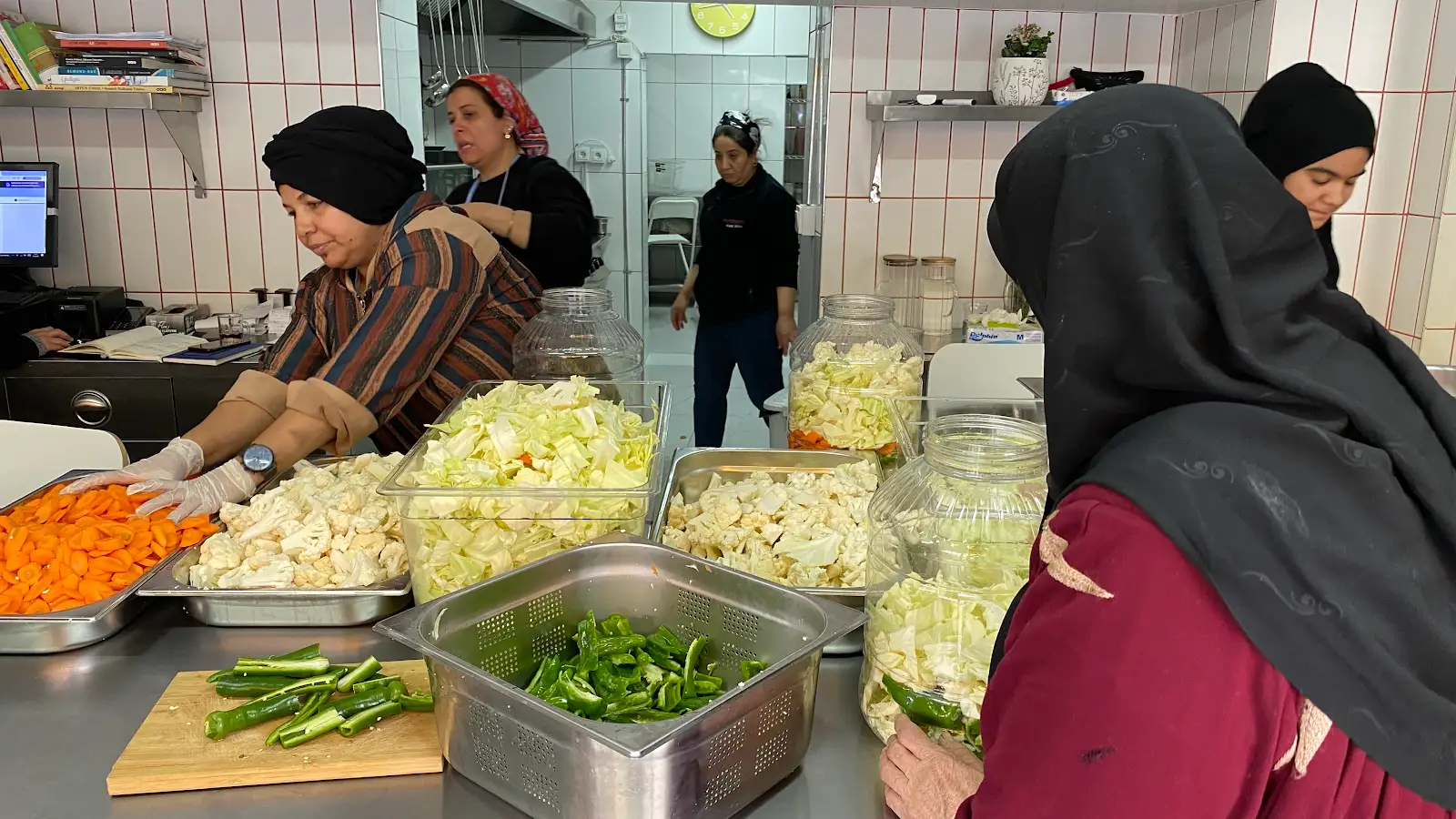
Figure 2. Kitchen Workshop opened a community kitchen after the earthquakes. Photo: Merve Bedir
These are fundamentally difficult questions when the nation state is against the local, and the international agency is becoming obsolete. It has proven too many times by now that business as usual leaves us under concrete rubble to inhabit, and asbestos air to breath.
In addition to the right to repair, how to repair is a question of who has the knowledge and merit, but we need to think of this beyond the expertise that flattens or ignores the local knowledge. I’m thinking of this one instance (before the earthquake), where women from Idlib in the Kitchen Workshop were teaching women from Gaziantep how to pick olives and the cold pressing techniques for making olive oil. Since Turkey has modernized its agricultural practices, old techniques are not used anymore, so we have mostly forgotten/let go the ancestral knowledge (in this case, of olive farming). It might seem primitive and outdated, but these technologies actually have the most precious knowledge: They are ecologically sustainable (does the least damage to the tree and allows it to grow fruits again efficiently), economically the most valuable, and where growth is based on extended family relations and, yet, outside capitalist meritocracy. Unfortunately, these techniques are either abandoned, or practiced by undocumented seasonal migrant workers who work in agriculture, so it is ironically their knowledge of the technique that also enslaves them to the system. This case makes me come back to thinking about how to collectively create just practices, ways of living together, political agency of communities, and what it is to unlearn and relearn within those, and together with whom/ what kind of friendships and alliances. Then life and environment are truly sustainable and resilient against earthquakes or other disasters.
The question of merit and knowledge could also be about a certain act of digging, which is about an intuition to find the unutilized former knowledge, which is about going deep down to recover the existing knowledge (law, archive, landscape, … ); its layers, the artefacts, memories that have been invisible/ silent (or made invisible/ silenced), and how this knowledge can help recreate different possibilities of life. For instance, the definition of citizenship in the municipality law is articulated in Turkey’s legal systems but is used by no one. This law defines an understanding of citizenship based on being from the same city, an urban citizenship. The law states that the people living in the same city are responsible to each other, and also responsible for participating in the decision-making mechanisms. It is a law that doesn’t ask for national identities or discriminate against the “statusless.” We use this law in the Kitchen Workshop as a basis for agency and belonging. I think this law can actually be instrumental to towards a political agency of science and community for building resilience against, as well as in the aftermath of the earthquake. The law can enable setting up assemblies, bringing scientists and the community together based on the specific geography inhabited, and think of how to reorganize, not only building but also food security, fair labor, accessible healthcare, and so on. This act of digging, i.e. looking for abandoned knowledge in the law or regulations, traditions, technologies, can also be extended to the ways of making cities, and inhabiting the land.
This could be a proposition for Istanbul, or elsewhere, where such effort is needed. Both repair and resilience have to center the community and the commons. Collaborating with the existing struggles, where the “statusless” are acknowledged, as well as those who are already engaged in “repair against reparations,” retelling their histories. Initiating anticolonial processes could offer a social, material, infrastructural, and environmental repair and resilience. A repairing practice after the earthquake has to be situated, intersectional, and ancestral, it has to take a position for utilizing processes with inhabitants, ruins, and heritage that are incremental and activist. These will maintain and restore, rather than focusing only on continuously building anew.
[NOTE: On 14 October 2023, the opening day of The Great Repair exhibition, a roundtable entitled “Repairing the Irreparable: After the Earthquake” was hosted at the Akademie der Künste. The event was part of the School of Repair, the events program for the exhibition’s opening. Merve Bedir, Eray Çaylı, and Nilgün Yelpaze contributed as speakers, and Nazlı Tümerdem, who was part of the exhibition’s curatorial team, moderated the event. None of the works in the exhibition focused particularly on the 2023 Turkey-Syria twin earthquakes, however the key themes covered (re)construction, demolition, waste, and solidarity. Therefore, it was essential to include this event in the exhibition program so that we could have a platform where we could discuss these themes and unfold what they might mean through the lens of the earthquakes. The text below, the first in a three-part series, is a transcript, edited for clarity and length, of this conversation on “repairing the irreparable.”]
Read this Roundtable
Reparations: Part I of a Roundtable on Repairing the Irreparable after the Earthquake by Merve Bedir, Eray Çaylı, Nilgün Yelpaze, and Nazlı Tümerdem
Solidarity: Part II of a Roundtable on Repairing the Irreparable after the Earthquake by Merve Bedir, Eray Çaylı, Nilgün Yelpaze, and Nazlı Tümerdem