[This article is the third in a four-part series. Click here to read the Preface; click here to read Part I; and click here to read Part III.]
Nazlı Tümerdem: “Lost lives cannot be rebuilt. The human psyche and culture have, however, developed mechanisms to cope with loss. This is the work of the living, to mourn and remember. But the lives of the dead will never be repaired. Reparation is a gift to the living, those who can repair and reconstruct their lives and their environments.”
This is what historian Yuliya Yurchuk writes, in her recent piece about the war in Ukraine entitled Resistance, Rebuilding, Resilience that was published in e-flux. Several works in “The Great Repair” exhibition were about war destruction. For instance, in the Keep the Scars Visible chapter, the contribution “A City within a Building” by Center for Spatial Technologies is a collaborative attempt to reconstruct the Mariupol Theatre by compiling thousands of photos, videos, and social media posts, and analyzing them using spatial research tools and augmenting this data set with hours of interviews with survivors. Following this, “Building amidst Destruction” by Mapping Ukraine aims to provide independent, open and intuitive access to information on the impact of war on civilian infrastructure in Ukraine. In this chapter. Moreover, Manuel Herz’s piece “Babyn Yar Synagogue” focuses on the ceiling painting that depicts the constellation of stars over Kyiv during the night of the 1941 massacre. Of course, my intention here is not to compare earthquake with war, as war is ultimately a manmade catastrophe. Nevertheless, Yurchuk’s words made me think of the 6 February earthquakes. How can we repair when we cannot work with the existing? Where do we start when all we have is destruction? How can we then, even have a reparative approach? Nilgün and Merve, you were on site after the earthquake, what can you tell us about this experience, can you give us some insight?
Moreover, in the Repair the Practice chapter, the exhibition showcased two moratoriums, one on new construction by Charlotte Malterre-Barthes, proposing to halt all extractive activities on the planet and the other one on demolition by Alexander Stumm, proposing to use the potential of the existing by caring and repairing, instead of constructing new buildings. Is it even possible to think of a moratorium on demolition, let alone, a moratorium on new construction if you’re facing an incomprehensible amount of rubble? Does it become a luxury to think about the “no-dig” construction industry/non-extractivist building practices when an area equal to half of Germany has been affected by the earthquake?
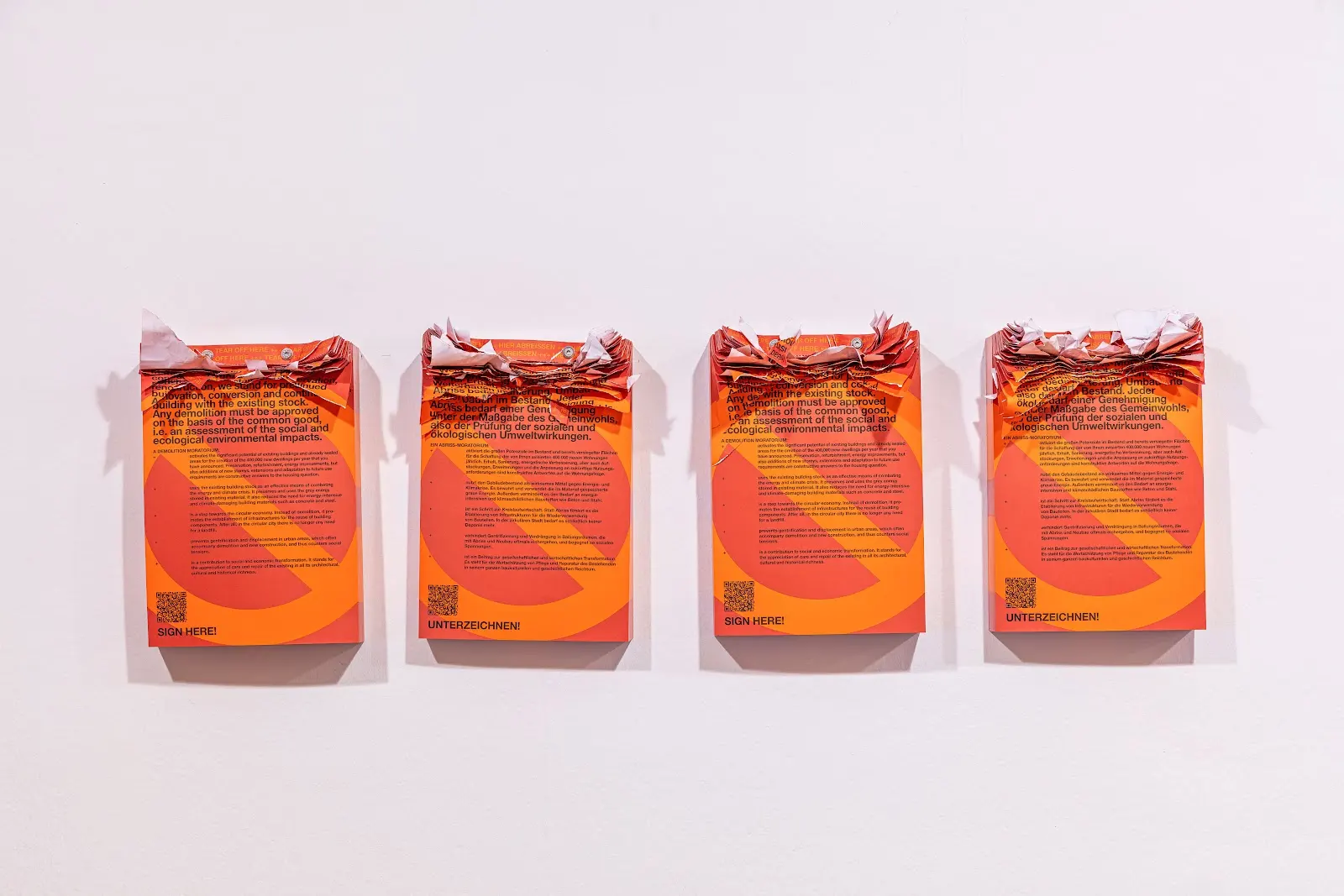
Figure 1. Close up of Demolition Moratorium by Alexander Stumm from The Great Repair Exhibition in Berlin. Credit: David von Becker
Nilgün Yelpaze: Before we could even discuss whether no-dig construction or non-extractivist building practices are possible or not, I think we need to talk about what happened immediately after the twin earthquakes. I would like to bring your attention to the story of the immediate aftermath of the earthquakes because I believe the practices that existed (or did not exist) in these moments give us a hint about how the rubble will be dealt with. The survivors had to wait for food, clothing, or sanitary supplies for many days during the immediate aftermath while the rescue crew failed to reach the required places in time, leaving victims under the rubble. None of these practices had an emphasis on preserving life. Therefore, I argue that when removing the rubble, the focus should be primarily on preserving life and developing a sustainable habitat for all living things.
Feminist Solidarity for Disaster Relief (Afet İçin Feminist Dayanışma) was founded by a group of feminists who met in Istanbul immediately after learning about the earthquake. They were actively engaged in the search and rescue operations within two days of the earthquake. These feminists did not all have prior familiarity with the region but they arrived there to make a difference and immersed themselves in the various activities, doing everything from operating concrete drilling machines to digging the rubble. They worked for days without rest to rescue people, skipping sleep, rest, and even basic necessities.
In Adıyaman, a common sentiment prevailed: Nobody had come to the rescue in the first three days; had they done so, many lives could have been saved. There were rumors of individuals trapped beneath the rubble whose cries were heard, but no help materialized in those critical initial days. Neither the Directorate of Disaster and Emergency Management (AFAD) and any other governmental organization, nor approved search and rescue experts responded quickly enough. People mourned as they listened to the cries of their relatives under the rubble and burned the scraps they found to keep warm. Adıyaman remained abandoned even on the 40th day after the earthquake, a ghost city.
While one might expect that non-extractivist construction policies would prioritize the well-being of all living beings within the area, the stories of failure emerging from the first three days of the rescue operations serve as a stark reminder of the value (or lack thereof) assigned to life. The question of who gets to be in charge also pops up in the context of reconstruction. If the role belongs solely to centralized government institutions, it appears that both human and non-human lives are undervalued. Furthermore, people who could contribute valuable insights into this question—for example, feminists, local organizations, or earthquake survivors—often lack the necessary means and authority to actively shape the reconstruction effort.
Despite its limited capacities, the Feminist Solidarity for Disaster Relief network tried to make a big difference in the field. In addition to participating in search and rescue efforts, Feminist Solidarity for Disaster began identifying the needs of women in the earthquake-stricken area. Women's needs had been ignored, as usual, making them more vulnerable during the earthquake. Some of the mothers who died in the earthquake were discovered in their children's rooms, where they had died while trying to shield them. Many women were hesitant to ask for help from the rubble due to the lack of appropriate clothing, such as skirts, headscarves, or other culturally and religiously suitable clothing. Several others entered damaged homes to recover their families’ possessions or at least a few items of clothing, but sadly died in the second earthquake. Since men were rarely involved in domestic tasks and lacked the necessary knowledge of the organization of the household, they directed the women to go inside the damaged homes to retrieve essential goods. No one would have even wondered why and how these women died, or what the survivors needed, if it hadn't been for feminists and women's organizations in the field.
After the feminist volunteers observed the myriad needs of women and LGBTQI+ individuals in the area, they came up with a concept they named The Purple Truck, where they collected donations from Istanbul and drove to the region. Women who had no access to clean underwear for days after being rescued contracted infections that required antifungal treatment. Nobody thought to bring sanitary pads. Thousands of pregnant mothers were in need. They needed clean socks, long underwear, and headscarves—in short, they wanted to address both their personal care and health needs when they were abruptly left without a home, while also trying to meet demands imposed on them by the traditional patriarchal norms, but no one heard them. Loaded with donations collected in Istanbul, the Purple Truck headed off with the hope of reaching women without being stopped and its cargo getting confiscated along the way (which was known to have happened to several aid trucks sent by political parties, trade unions or NGOs). When it arrived in Adıyaman, state authorities confiscated several items from the Purple Truck’s cargo. These items were transferred between warehouses managed by the state, and eventually arrived at the tent city. Feminist solidarity entailed not only collecting and distributing material goods, but also anticipating, listening to, and meeting women’s needs. After the initial interventions, the Feminist Solidarity for Disaster Relief established two women's tents in Hatay and Adıyaman, where volunteers resided until the summer. Volunteers rotated on a weekly basis. They also collaborated with other organizations to identify and address issues related to women's health, gynecological needs, domestic violence, and mental health.
Moreover, in Hatay, the crops cultivated or products made by the women affected by the earthquakes--such as fresh fruits, canned tomatoes, or olive oil--were shipped to Istanbul and sold through the network. Additionally, a women's food truck was introduced to the area to empower women in initiating their own small enterprises as they sought to build new lives.
Based on this experience, we can answer the issue of whether a reparative approach is possible: what exactly are we going to repair? Because all these consequences Feminist Solidarity for Disaster Relief observed and tried to intervene in are the consequences of racial capitalism and patriarchy as well as the earthquake. The region had already experienced village evictions, war, and ecological destruction before the earthquake, as Eray mentioned earlier. A reparative approach requires a holistic understanding of the destruction and loss, which goes beyond the earthquake. There are losses that have not been mourned yet, there are parts of the even more distant past that are confronted neither by the state nor the society at large. I could only emphasize that the work of the Feminist Solidarity for Disaster Relief brings a gendered perspective on reparations, not only by making the invisible visible but also by bringing a feminist approach into the act of repair and care itself.
But as we are not local agents or disaster survivors, our capacities on deciding how to live and how to rebuild is limited. Hundreds of feminists were able to provide some underwear and some sanitary pads with great effort—with love, care and sisterhood. Although such display of solidarity and feminist care work is quite impressive/amazing, it is quite scary to think how much remains to be done. I therefore believe that a comprehensive understanding of a non-extractivist, environmentally and socially aware and sustainable reconstruction requires agency and participation.
Merve Bedir: I am an architect, and I have been working with and volunteering for Kırkayak Kültür in Gaziantep in different capacities since the revolution in Syria. Kırkayak Kültür is a Non-Governmental Organisation (NGO) located in Gaziantep, in South-East of Turkey / across the border from Aleppo in Syria. It’s worth to mention here that Gaziantep, Kahramanmaraş, Adıyaman, Antakya/Hatay, Aleppo and Idlib are neighbor cities in the region between Turkey and Syria, and have been heavily impacted by the earthquakes.
Kırkayak Kültür is in Bey neighborhood in Gaziantep. Several buildings in this former Armenian neighbourhood had laid vacant for decades after the Genocide/after 1915. More recently, those forcefully evicted by the state from their villages in Turkey’s Kurdish regions during the 1990s, and later refugees arriving from Idlib, Aleppo, and other Syrian cities during Syrian Civil War have temporarily occupied these buildings. I think the work of Kırkayak Kültür (since its beginnings) is an act of repair, despite a lack of reparations: Their work is engaged in Bey neighborhood and the region, acknowledging its past and present peoples, and especially its statusless peoples by inhabiting and living with the erasures, displacements, and destructions of the place.
We initiated the Kitchen Workshop in Kırkayak Kültür in 2015, as part of a years-long practice of solidarity with migrants from Syria, and conversations departing from “migration as condition,” around the question of “learning to live together,” beyond the immediate issues surrounding migration as emergency, and humanitarian aid as infrastructure of statuslessness. Kitchen Workshop started as a space by women, through myriad ways of working and dreaming together. It (hadn’t started as a physical kitchen, but) was a space of solidarity, aiming to be a safe space for women who experience violence, but also for cooking up/creating ideas for living together. It has found different ways and shapes of continuing with these ideals, disaster after disaster. Facing the mass displacement of peoples, against racism and discrimination, concerned with undocumented work and public health issues, our main strategy was to create space for visibility and clear communication of these matters, as well as space for healing and advocating to change these conditions. As we continued, we wanted to start a physical kitchen, which included cooking as a catalyst of this space. Two years later COVID pandemic broke, leading to an impossibility of using the kitchen as an indoor space. In that period, we continued gathering in open air as much as possible, and being active around recording the injustice, the invisibility and deepening of the issues around migration from Syria.
Nilgün gave an extensive account of what happened in Adıyaman in the immediate aftermath of the 6 February earthquakes. I won’t repeat those, but just to say that Kırkayak Kültür has been working similarly with survivors in Gaziantep, providing assistance to the marginalized communities that have been invisible to the state, with food, medicine, accessible information, and so on. Kırkayak Kültür has also been documenting the deepening racism and discrimination especially against migrants from Syria and Dom people, in the aftermath of the earthquake.
I wasn’t in Turkey when the earthquake took place, friends in Kırkayak Kültür and Kitchen Workshop directed me not to go immediately, because so much help was already being organized by local groups, people from other Turkish cities and communities living abroad. They told me “you are worried about us, but we are worried about you; your concerns are amplified because you are away.” This is the empathy of solidarity… It was surprising altogether; I/many people weren’t expecting the people in/of the country to be so willing to run to the rescue of those affected either. Since the 2010s, Turkey has been so polarized, and, in fact, so atomized that everybody sees each other as part of a certain polar/divisive doctrine, and thus, as enemies. It felt like nothing could galvanize people for collaborative/collective action even amongst close-knit families, but the earthquake brought everyone together in that moment.
When I arrived in Gaziantep a month after the earthquake, I went to Nurdağı and Islahiye, two periphery districts of Gaziantep, both of which were completely destroyed. Kırkayak Kültür and Kitchen Workshop had been providing aid in these districts. Visions I can’t let go yet are Dom people in tents, the asbestos cloud in the air, and the construction rubble (also containing asbestos, of course) being dumped into the Amik valley. Amik valley comprises the most fertile agricultural soils of the region on which, among other things, the oldest pistachio and olive trees grow. There I have to ask again, who is to repair what, in this context? I mean, the whole idea of a modern state should be about not letting an earthquake have such destructive consequences. If not to avoid such destruction, if not to plan for the proper removal of concrete rubble without further environmental consequences, what is the use of a state?
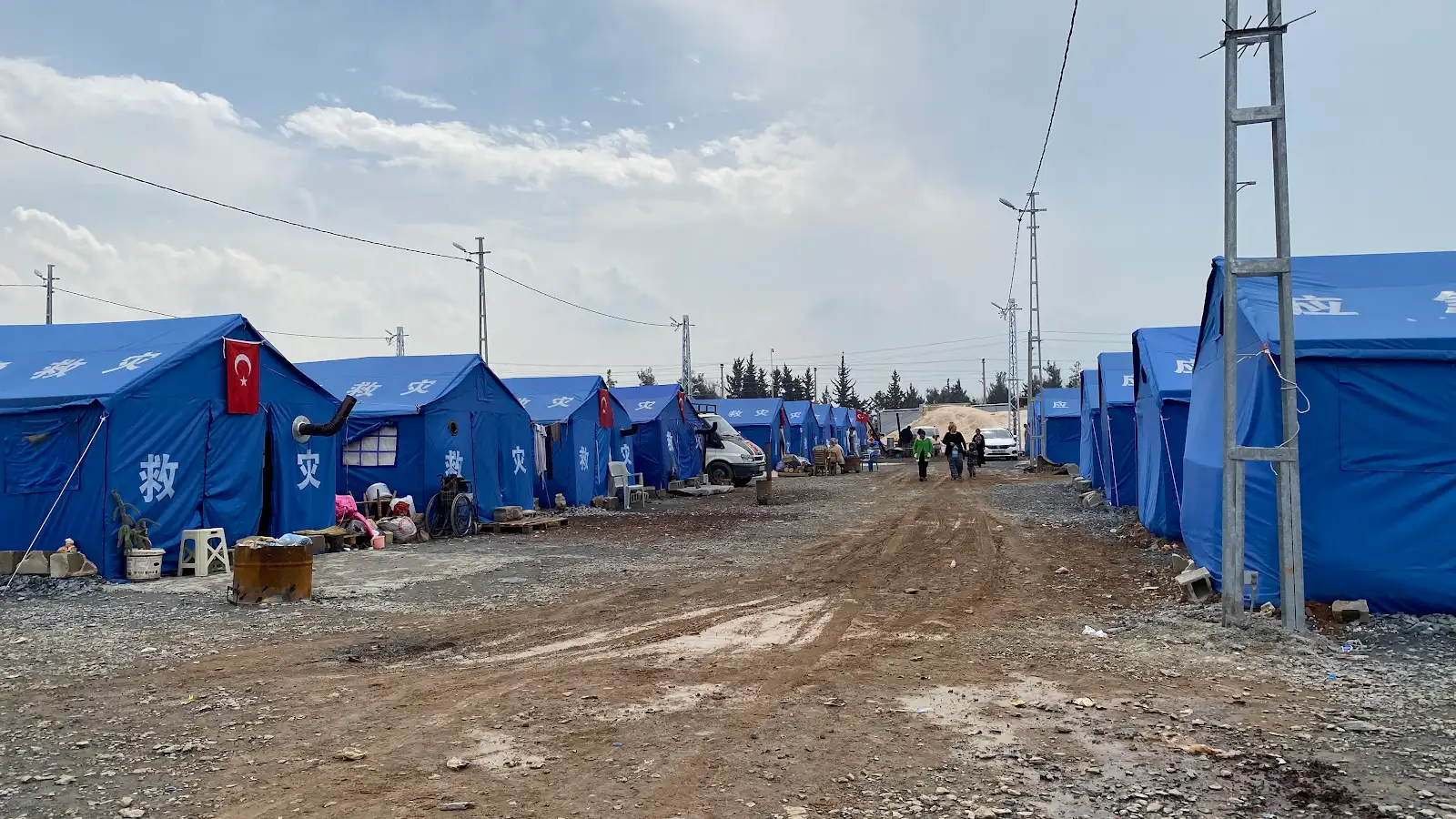
Figure 2. Dom people living in tents three months after the earthquake. Nurdağı, Gaziantep. Photo: Merve Bedir
Video 1. Construction rubble being collected in Amik Valley. Video: Merve Bedir
Women from Aleppo in the Workshop wanted to volunteer, they started cooking in a restaurant’s kitchen, and distributed the food in these districts, offering solidarity to Gaziantep’s locals who are now experiencing conditions similar to their (dispossession and displacement) back in 2011. This is a paradigm shift, where we see their roles getting reversed in practice, where we see new life with its values in practice, within the rubble. I would think of this as an act of repair. I’m hoping for new life that allow indigeneity, that allow self-organizing, that allow mobility in all aspects of (daily) life. We (women in Kitchen Workshop) try to think and make space from within migration as condition. We look for the sustenance for justice in unjust lands, look for unconditional hospitality on hostile infrastructures, while demanding that we question our own positionality and responsibility within all this. This is, for me, where our friendship as Kitchen Workshop members start from. We have been working towards the possibility of a non-extractive, sustainable life and instituting.
In the aftermath of the earthquakes, many people who were able to leave for other cities, short or long term, left. Indeed, staying among the rubble, living through the aftershocks of the earthquakes, in the cold weather, in tents or container shelters perpetuate and deepen the trauma. In this period, we decided to start an industrial kitchen in Gaziantep, so the women who want to stay, can stay with some sort of sustenance of livelihood. This may be the first moment that Kitchen Workshop is embracing to stay, as a permanent, physical kitchen. We also agreed to initiate a mobile kitchen that can move around and take food to different places where it is needed.
Here, I have to highlight the questions Eray and Nilgün already raised: who is repairing what, why and for/with whom? Architects, actually most professionals and technocrats, are solution-oriented people, their default mode of operation is to solve problems rather than asking fundamental questions such as “Is a “great” repair even possible?” “What is it to repair?” “What is the scale of its operation?” “What are its spatial and temporal limits? Then, I think of Charlotte Malterre’s moratorium, if this scale of catastrophe won’t make us question building anew, in concrete, without effective recycling mechanisms of any sort, or other assumptions embedded in our profession, what else will?
In the aftermath of a disaster of such scale, repair is very difficult to discuss, even to pronounce. I’m thinking of Bas Princen’s work in the exhibition (as Nazlı mentioned in Part I of this conversation), which evokes the possibility of leaving the rubble as it is as an active intervention, the fragments of a catastrophe to be the repository of and monument to the failure of a state with all its mechanisms. I don’t think it’s for “us,” those who haven’t experienced the earthquakes, the death, and the destruction, to decide what constitutes and should be preserved as memory and where reconciliation could take place, but this is where we could acknowledge irreparability. We need to name what is irreparable and not inhabit it anymore. Here I’m not necessarily referring to concrete ruin to be recycled or to be rid of, or a particular place that should be cleaned or evacuated, but more a material condition that is uninhabitable, thus irreparable. Reinforced concrete doesn’t have to be the default material and system of contemporary environments, infrastructure don’t have to work to displace and dispossess people, resource-ing doesn’t have to be an end game of labor and landscapes, making people more prone to disasters.
Then, my rage is about the people who are invisible to the state, marginalized, oppressed, living in constructed dependency and poverty. They are the ones exploited within the rapid urbanization and its financial economy, and also the ones who get killed as part of this collective suicide (as I mentioned in the Part I of this conversation), and who, in the aftermath of the earthquake, cannot leave the region simply because they don’t have the means to, who work in extremely dangerous conditions pulling down the heavily damaged buildings, or who returned to their heavily damaged homes because there was no provision for temporary living space and they wouldn’t be able to survive the freezing cold in February. Here I’m thinking of the limits of extractivism, extracting from the land and earth, extracting from the human, migrant workers, undocumented workers, people who are deemed disposable… If we can take their life to repair as a goal, as a model calculation, then we can resolve the question for everyone.
[NOTE: On 14 October 2023, the opening day of “The Great Repair” exhibition, a roundtable entitled “Repairing the Irreparable: After the Earthquake” was hosted at the Akademie der Künste. The event was part of the School of Repair, the events program for the exhibition’s opening. Merve Bedir, Eray Çaylı, and Nilgün Yelpaze contributed as speakers, and Nazlı Tümerdem, who was part of the exhibition’s curatorial team, moderated the event. None of the works in the exhibition focused particularly on the 2023 Turkey-Syria twin earthquakes, however the key themes covered (re)construction, demolition, waste, and solidarity. Therefore, it was essential to include this event in the exhibition program so that we could have a platform where we could discuss these themes and unfold what they might mean through the lens of the earthquakes. The text below, the second in a three-part series, is a transcript, edited for clarity and length, of this conversation on “repairing the irreparable.”
Read this Roundtable
Reparations: Part I of a Roundtable on Repairing the Irreparable after the Earthquake by Merve Bedir, Eray Çaylı, Nilgün Yelpaze, and Nazlı Tümerdem
Healing: Part III of a Roundtable on Repairing the Irreparable after the Earthquake by Merve Bedir, Eray Çaylı, Nilgün Yelpaze, and Nazlı Tümerdem